
Definition of a Float Pool
A float pool is a group of nursing staff who, unlike the permanently scheduled staff assigned to a ward, are allocated flexibly and according to demand across the departments of a hospital or care facility - depending on where support is currently needed. This enables staffing shortages caused by short-term absences or vacation periods to be effectively compensated for and day-to-day nursing operations to be organized more reliably.
Why float pools in nursing are becoming more important
The shortage of skilled workers in healthcare is widely known. In addition, high sickness rates often lead to unpredictable absences. Filling open shifts at short notice is becoming increasingly difficult, while the workload for nursing teams continues to rise. As a result, stable duty rosters and predictable working conditions are becoming increasingly important.
How the float pool concept in nursing works
Float pools are used in various nursing areas. Float staff often support different wards in a hospital or compensate for staffing shortages in long-term care facilities such as nursing homes. For the flexible deployment of float staff to work, an effective workforce scheduling process is needed to make absences visible at an early stage. Not every float staff member is suitable for every task. That is why a transparent overview of qualifications is also important, showing which activities each float staff member has the relevant expertise for and where they can provide support. Clear rules and processes must be established to transparently define when float staff are deployed and who decides on their assignment.
Benefits of a Float Pool
Float pools can support care facilities in many areas. The key benefits for employees, planning teams, and patients at a glance:
- High roster stability: Float pools make nurse and caregiver scheduling easier to plan. Short-term absences are quickly covered by qualified float staff, so nursing staff less often have to take on additional shifts on days that were originally scheduled as days off.
- Relief for planning teams: Available float staff can be deployed in a targeted way when short-term absences occur. This speeds up the filling of open shifts and reduces the coordination effort involved in workforce scheduling.
- Increased continuity of care: When sufficient staff are available, continuous patient care becomes possible. By using float staff, people in need of care receive the support they require. This can improve both patient satisfaction and the quality of care.
- Higher employee satisfaction: Reliable deployment plans reduce last-minute roster changes and unscheduled additional shifts. Greater planning certainty makes it easier to balance work and private life and promotes employee satisfaction.
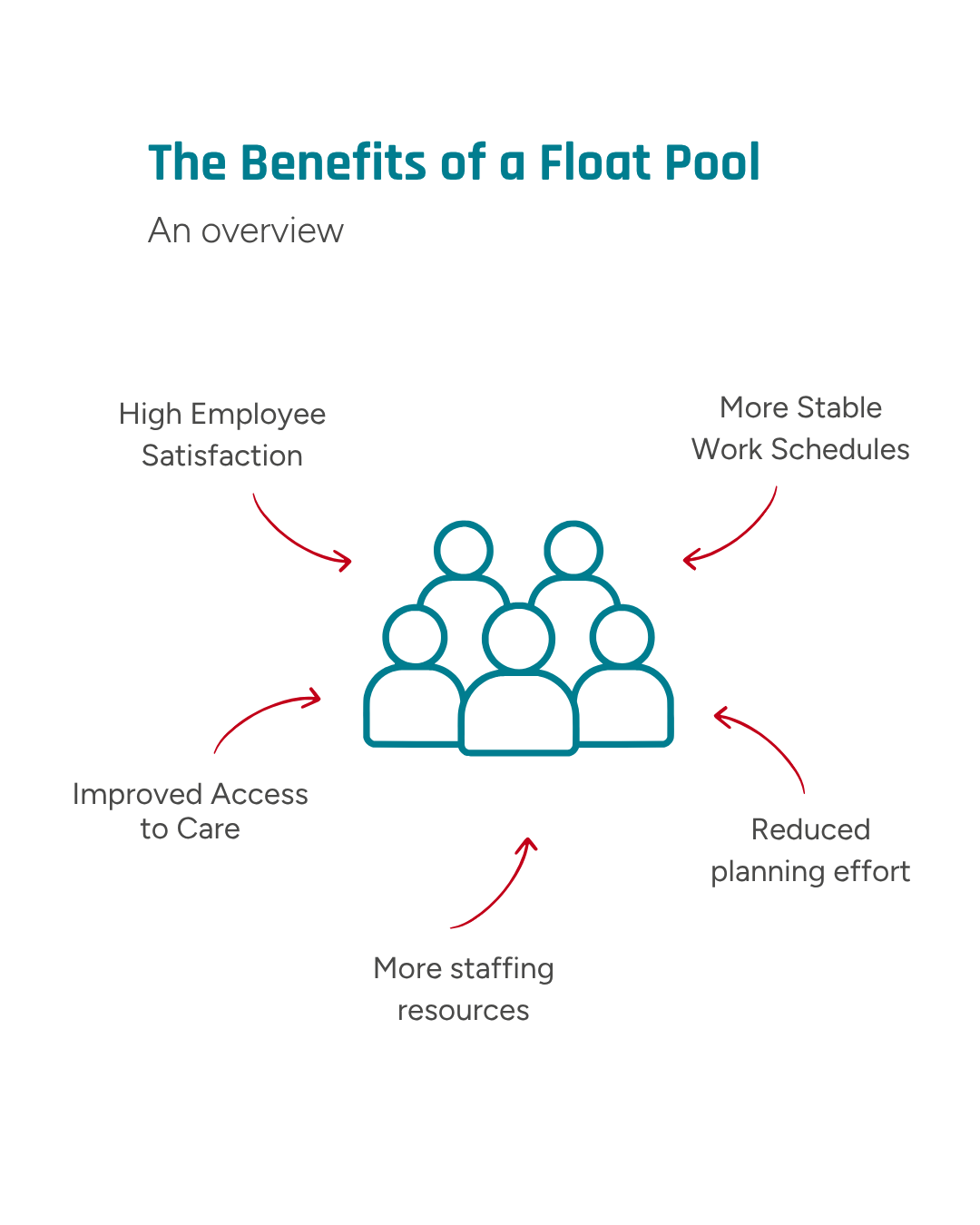
The use of float pools offers care facilities significant added value. © GFOS Group
Challenges of Float Pools
The float pool concept offers advantages, but challenges must also be taken into account:
- Planning and coordination: The deployment of float staff must be planned according to demand and in line with their qualifications. The constantly changing assignment locations of float staff, as well as last-minute changes, make coordination even more difficult. Transparent communication about float staff availability is important.
- Cost-effectiveness and costs: Setting up a float pool involves additional costs. To ensure cost-effectiveness, the size and composition of the pool should be reviewed regularly and aligned with the facility’s actual needs.
- Permanent compensation for staffing shortages: A float pool is intended to absorb short-term absences and create additional flexibility. If float staff are used permanently to fill staffing gaps, there is a risk that long-term staffing shortages will not be solved sustainably and that necessary measures for recruiting staff will be pushed into the background.
Float Pool and Strategic Absence Management Compared
Strategic absence management in the healthcare sector comprises various measures for compensating for short-term absences and ensuring care within a care facility. Float pools - alongside substitute staffing concepts or flexible working time models - should be regarded as one component of comprehensive absence management. To minimize risks in the long term, facilities should combine several measures to create a resilient system.
Unlike strategic workforce planning, absence management focuses on dealing with unforeseen absences and staffing shortages. Strategic workforce planning takes a long-term approach and specifically considers future factors such as staffing requirements, qualifications, or organizational changes.
Are short-term absences making your planning more difficult?
With GFOS, you keep track of complex duty rosters and coordinate schedule changes quickly, easily, and flexibly. Discover the future of workforce planning.
