When Nurse Scheduling Becomes a Daily Operational Challenge
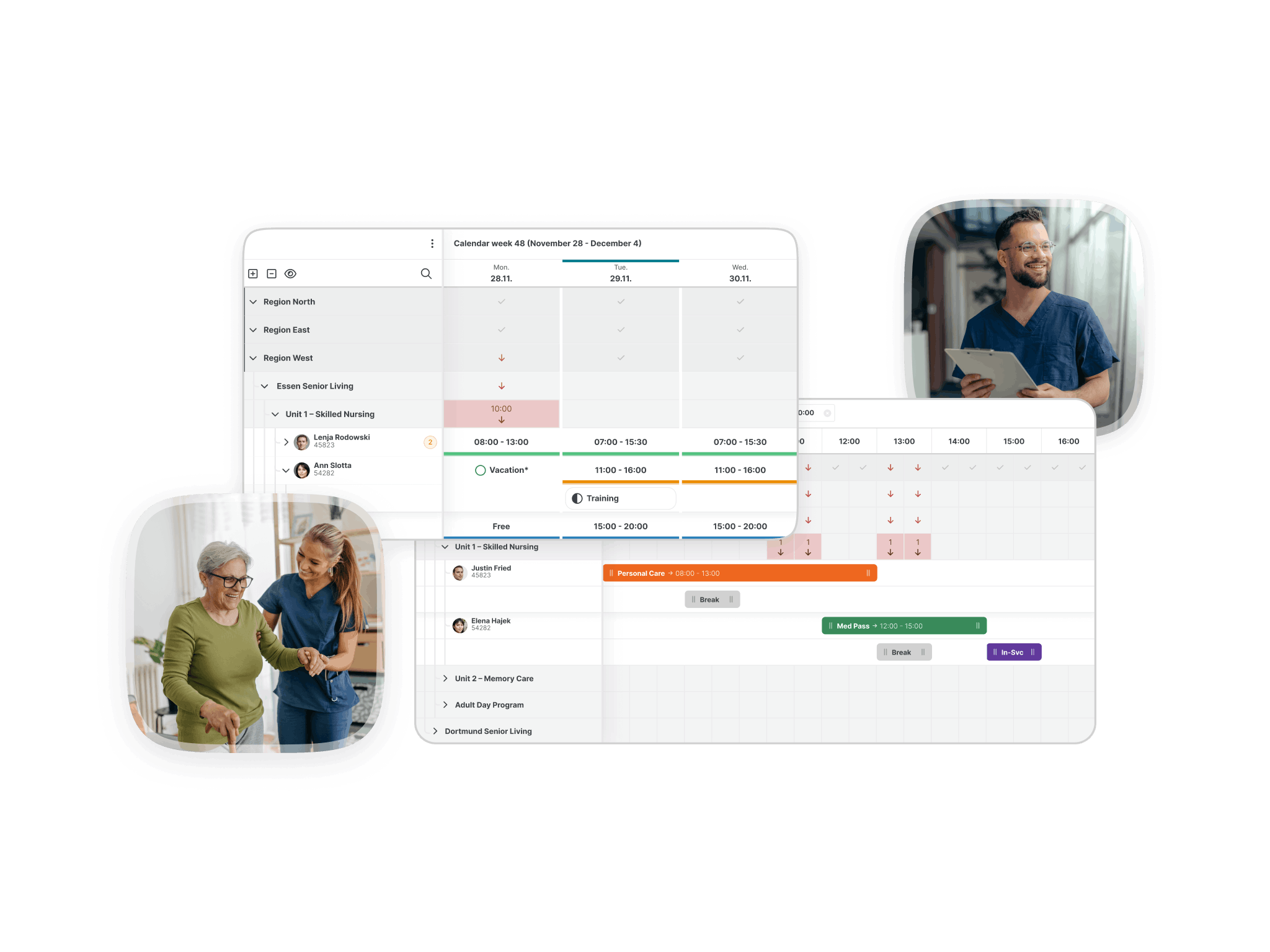
Multiple regulatory frameworks, strict qualification requirements, and the need to respond quickly to unplanned absences: nursing homes and care managers face complex scheduling challenges every day. GFOS.Workforce Management addresses these issues directly by combining workforce scheduling, time tracking, absence management, and analytics in one integrated solution.
Team Absences
High sickness rates and limited staffing: every last-minute absence creates operational pressure and increases the workload for remaining employees.
Qualification Requirements
Licensure, specialty qualifications, and proof of training define who can be assigned to which shift—making qualifications a critical scheduling rule.
Employee Retention
Last-minute schedule changes often affect the same employees. Over time, this can impact satisfaction, turnover, and long-term employee retention.


How GFOS’ Caregiver Scheduling Software Supports Care Providers and Healthcare Organizations
One solution, multiple use cases:
- Qualifications as Scheduling Rules: define facility-specific requirements as mandatory or preferred rules in the system to create reliable schedules faster
- System-Based Compliance Checks: map labor laws, collective agreements, and internal works agreements, then visualize violations directly in the care schedule
- Employee Pool: plan across departments, units, or locations whenever needed
- Shift Swaps and Employee Preference Book: manage preferences and swap requests digitally instead of relying on manual processes
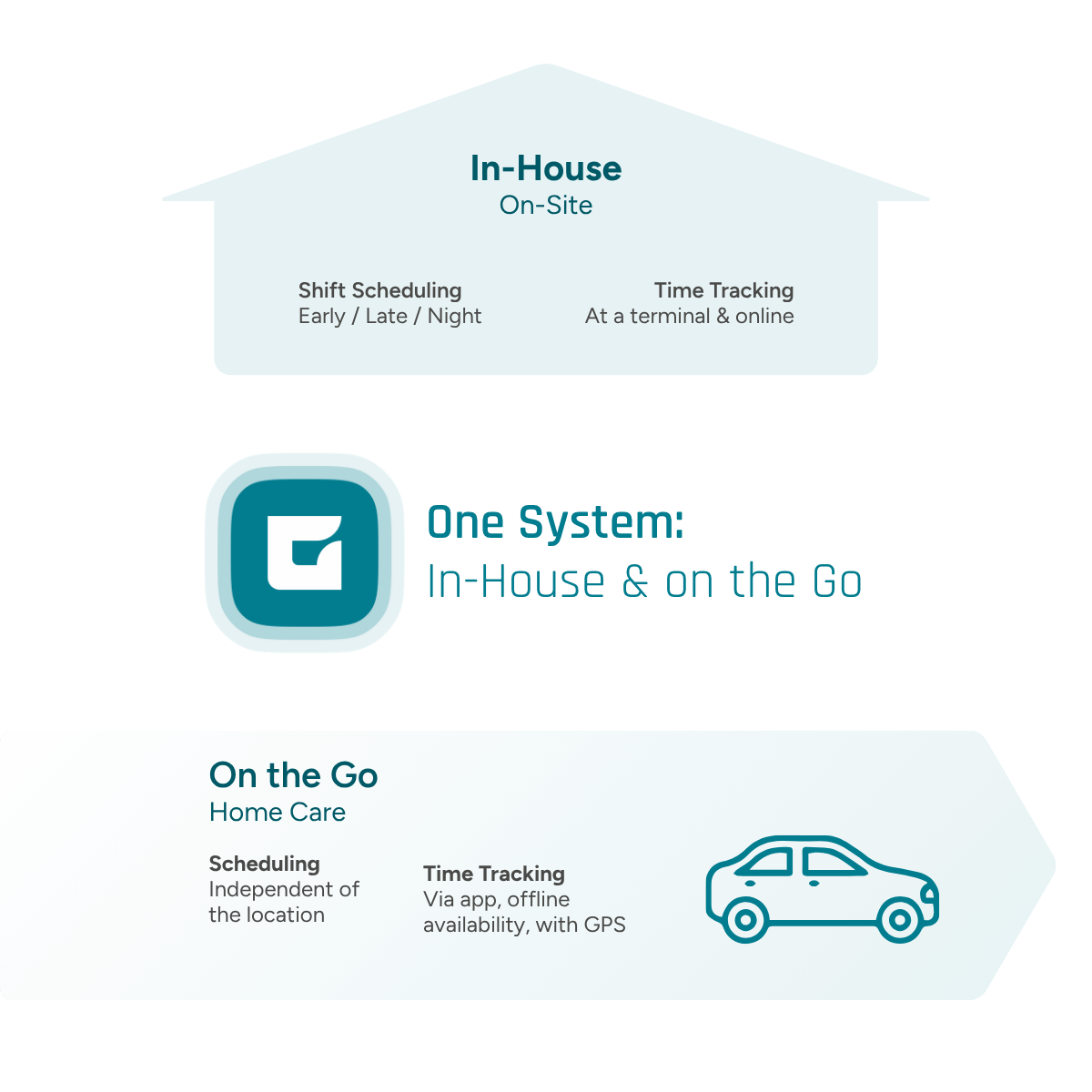
- Time Tracking for Every Work Model: capture time at a terminal, in the app, or on-site—online, offline, and with GPS support
- Absences and Electronic Sick Notes: manage sickness notifications through a certified integration
- AI Integration: simplify HR and scheduling analytics with GFOS Intelligence, submit time entries and requests via chat, and much more
Qualification-Based Long-Term Care Scheduling Software for Managing Absences
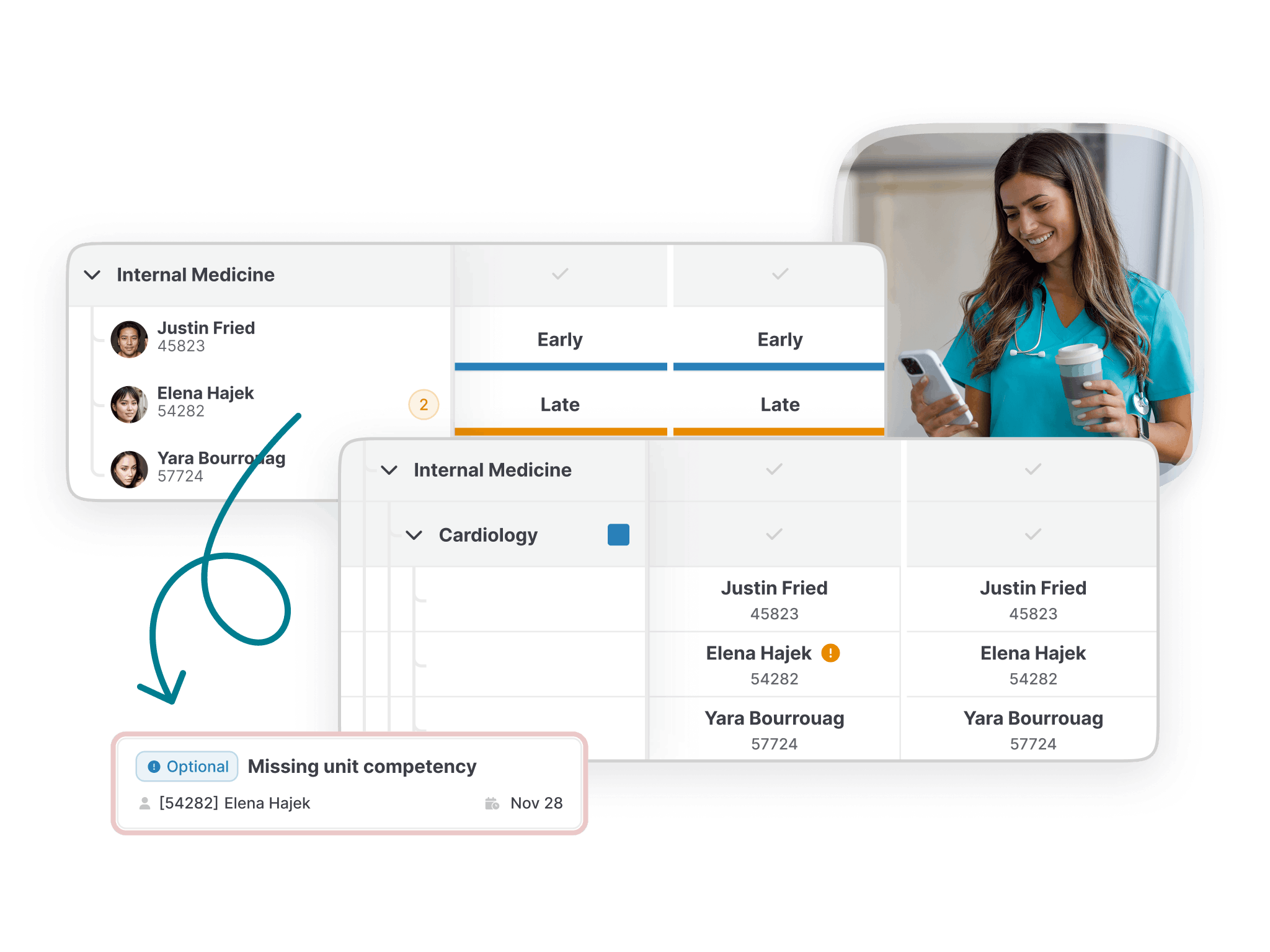
When a care professional calls in sick, response time matters. Strategic absence coverage is expensive and often tied to temporary staffing. That is why more providers are building internal flexibility into their workforce operations. GFOS’ caregiver scheduling software supports this with an employee pool: available qualified employees can be released and assigned by planners wherever coverage is needed.
- Available Employees at a glance instead of time-consuming phone chains
- Cross-Functional Pool Release across departments, cost centers, and workplaces
- Shift Swap Marketplace for employee swap requests, with manual backfilling available at any time
- Electronic Sick Note Integration so absences are reflected in workforce scheduling
- Working Time, Rest Period, and Qualification Rule Violations visible directly in the schedule
Identify Staffing Bottlenecks With GFOS Intelligence Before They Become a Problem
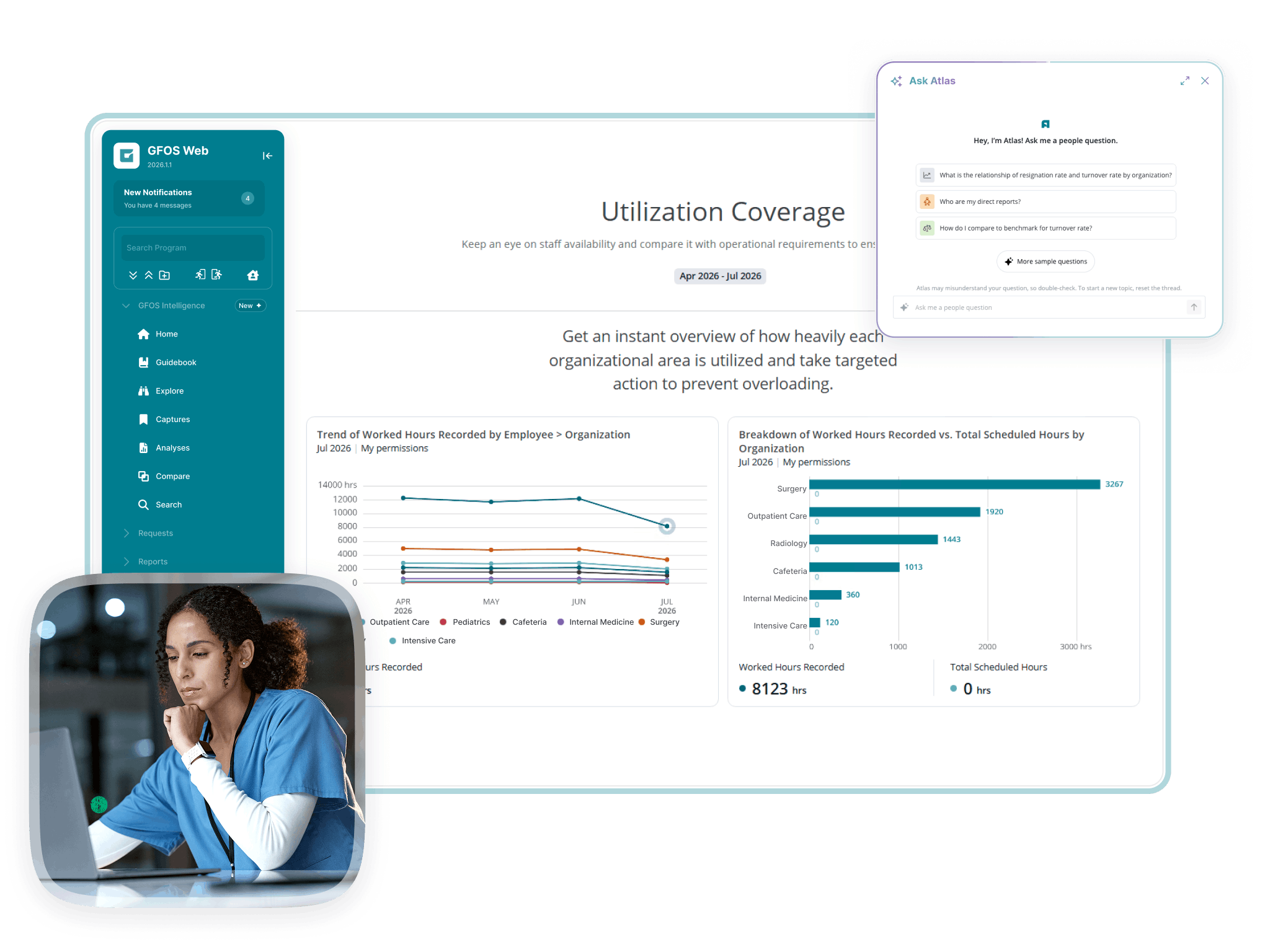
With the integrated HR analytics system GFOS Intelligence, you can evaluate scheduling and workforce deployment data in just a few clicks. This helps HR and operations teams make workload, staffing demand, and planning forecasts visible for more reliable decision-making.
How GFOS Intelligence Helps You Save Time:
- Interactive Dashboards: use scheduling data, industry benchmarks, and more to make faster, better-informed decisions
- Forecasts: identify resource bottlenecks early for greater planning reliability
- Role-Based Permissions: control exactly who can access which analytics and reports
Time Tracking for Care Providers: Capture Working Time On-Site and on the Go
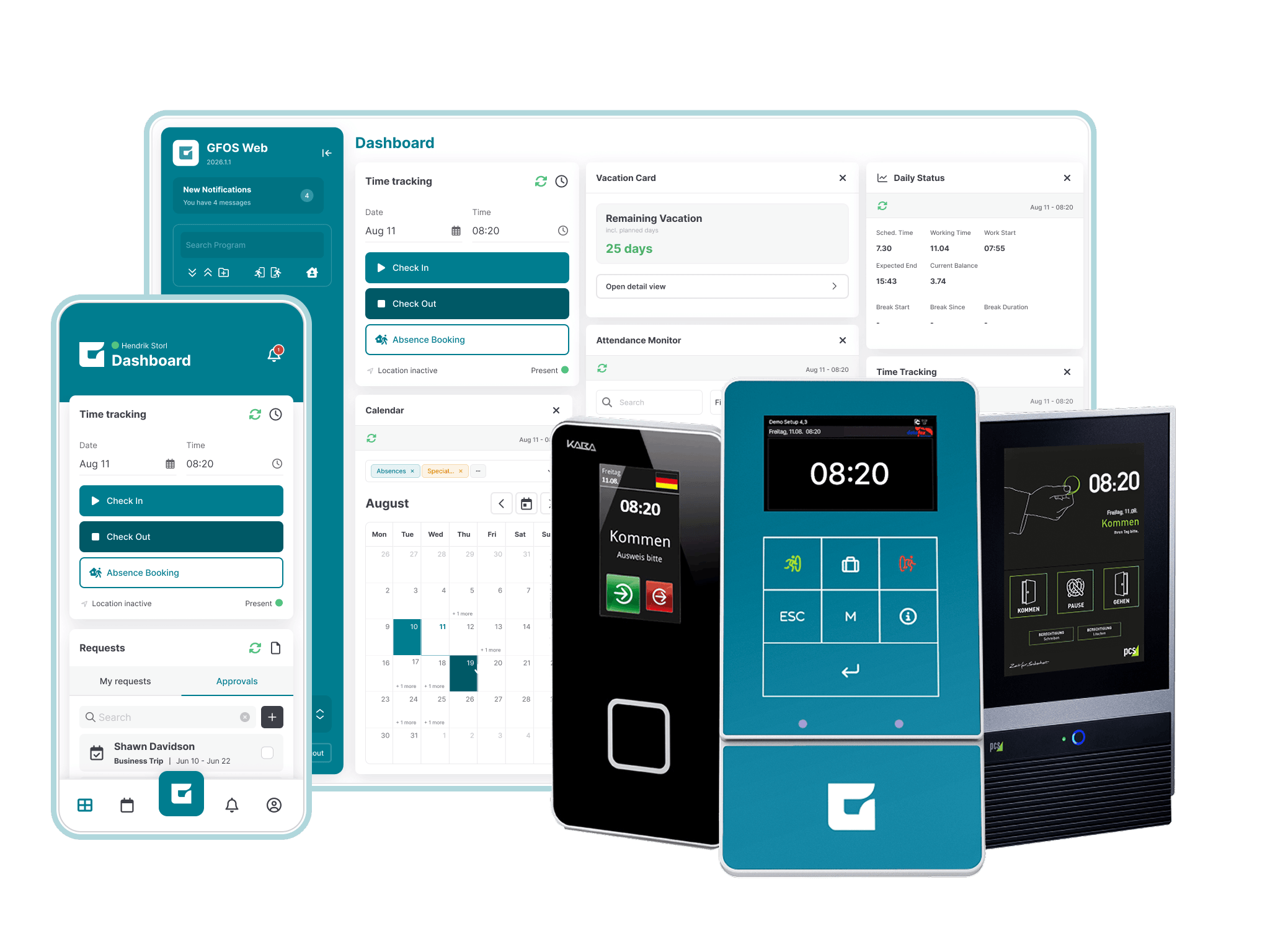
Caregivers must comply with working time regulations in addition to many other legal and operational requirements. As a result, working time must be documented completely and transparently in the nurse scheduling software—something paper timesheets can hardly support at scale. For mobile care teams working across changing locations, reliable time tracking is essential for compliance, payroll accuracy, and operational visibility.
Key Benefits at a Glance:
- Terminal-Based Recording: document working time in the facility or on-site with minute-level accuracy and audit-proof records
- Mobile App: capture hours anytime, even offline, with GPS support when needed
- Automated Validation: map working hours, breaks, rest periods, and collective agreement requirements
- Premiums and Special Time Types: document securely and transfer data to payroll
- Chat-Based Entry: submit time entries and requests in natural language
Use Case: From Absence to Covered Shift
6:10 AM: A care professional calls in sick for the early shift. The notification is processed electronically in the GFOS system, and the employee is marked as absent.
6:25 AM: The care manager sees who is available and approved for this unit in the float pool. The shift requires a licensed professional: thanks to stored qualification data, the system only shows suitable employees.
6:55 AM: The employee arrives and clocks in at the terminal in the facility.
2:45 PM: In the home care service of the same provider, a colleague records working time in the app directly at the client location—offline while there is no network connection, with GPS confirmation. The entry synchronizes automatically once the connection is restored.
3:00 PM: All open shifts have been covered quickly with the help of the clear scheduling view. The system also creates an automated scheduling proposal for the next day.
4:00 PM: At the end of the shift, the GFOS system evaluates premium pay components according to the applicable agreement. The data from time tracking for nursing homes and caregivers is ready for payroll.
The Result: Cover last-minute absences with qualified staff and full compliance—without phone chains, paper-based processes, or gaps in documentation.
Get to Know Our Bundles
Optimize your time tracking with Time & Attendance – flexibly scalable from Base to Enterprise.
To the bundle Time & Attendance-
Base
Custom dashboard & widgets
Attendance & absence tracking
Employee self-service portal
Mobile time tracking & GFOS App
Electronic certificate of incapacity for work

GFOS Terminal App
Evacuation list app
Digital ID card creation
Temporary employment
Project time tracking & controlling
Customized analysis & reports
-
Professional
Custom dashboard & widgets
Attendance & absence tracking
Employee self-service portal
Mobile time tracking & GFOS App
Electronic certificate of incapacity for work
GFOS Terminal App
Evacuation list app
Digital ID card creation
Temporary employment
Project time tracking & controlling
Customized analysis & reports
-
Enterprise
Custom dashboard & widgets
Attendance & absence tracking
Employee self-service portal
Mobile time tracking & GFOS App
Electronic certificate of incapacity for work
GFOS Terminal App
Evacuation list app
Digital ID card creation
Temporary employment
Project time tracking & controlling
Customized analysis & reports
Our success stories
Discover the GFOS Software Portfolio

Answers to Your Questions
In Germany, staffing level planning under Section 113c of SGB XI defines a nationwide approach for calculating staffing requirements in fully residential long-term care. It uses demand-based staffing ratios based on care level structures and qualification matrices. The reference values have applied since 2023.
Relevant data points, such as actual staffing levels, assigned qualifications, and absence times, form the basis for the long-term care scheduling software. An integrated system ensures that this data is available in a structured format and can be evaluated for documentation and audits.
Yes. You can flexibly define which information you want to use in scheduling, helping planners keep important details in view without overloading the interface. Qualification-based scheduling rules can also be stored so they are automatically factored into scheduling proposals.
GFOS supports multiple time capture options. Employees can record hours directly in the app at the point of care—even offline and with GPS support. Entries are synchronized with the central time management system and are available as audit-proof data for reporting, payroll, and compliance documentation.
Yes. With a float pool, you can release qualified employees for caregiver scheduling software across other planning units and assign them where they are needed—even if the original planner does not have permission for that specific unit. The exact setup depends on your organizational structure.



Would you like to learn more about GFOS software or receive additional information? Please feel free to contact us so we can discuss your needs together.
Contact