When Staff Absences Become Part of Daily Operations
Absences cannot be avoided entirely. The challenge is to minimize their impact on patient care and the workforce as much as possible.
Uncontrolled extra work and overtime
Open shifts are covered through additional assignments and double shifts for existing employees. This leads to rising overtime, higher workloads, and growing dissatisfaction among affected teams, up to the point where caregivers move to other employers or leave the profession altogether.
Difficulty filling open shifts
Short-notice absences require fast responses. At the same time, identifying suitable replacements and checking their availability often involves extensive coordination.
High costs from agency staffing
If absences cannot be covered internally, healthcare organizations often must rely on temporary and agency staff. This not only increases personnel costs but also makes long-term workforce planning more difficult.
Lack of transparency in staffing reserves
Determining which employees are available on short notice or eligible for additional shifts often requires significant manual coordination.
Strategic Float Pool Management Instead of Reactive Decisions
Strategic absence management in healthcare requires HR leaders and workforce planners to have access to all relevant information on staffing needs, availability, qualifications, staffing reserves, and open shifts. GFOS consolidates this data clearly in one central platform, enabling organizations to assess absences in a structured way and initiate measures at an early stage.
Centralized Absence Management
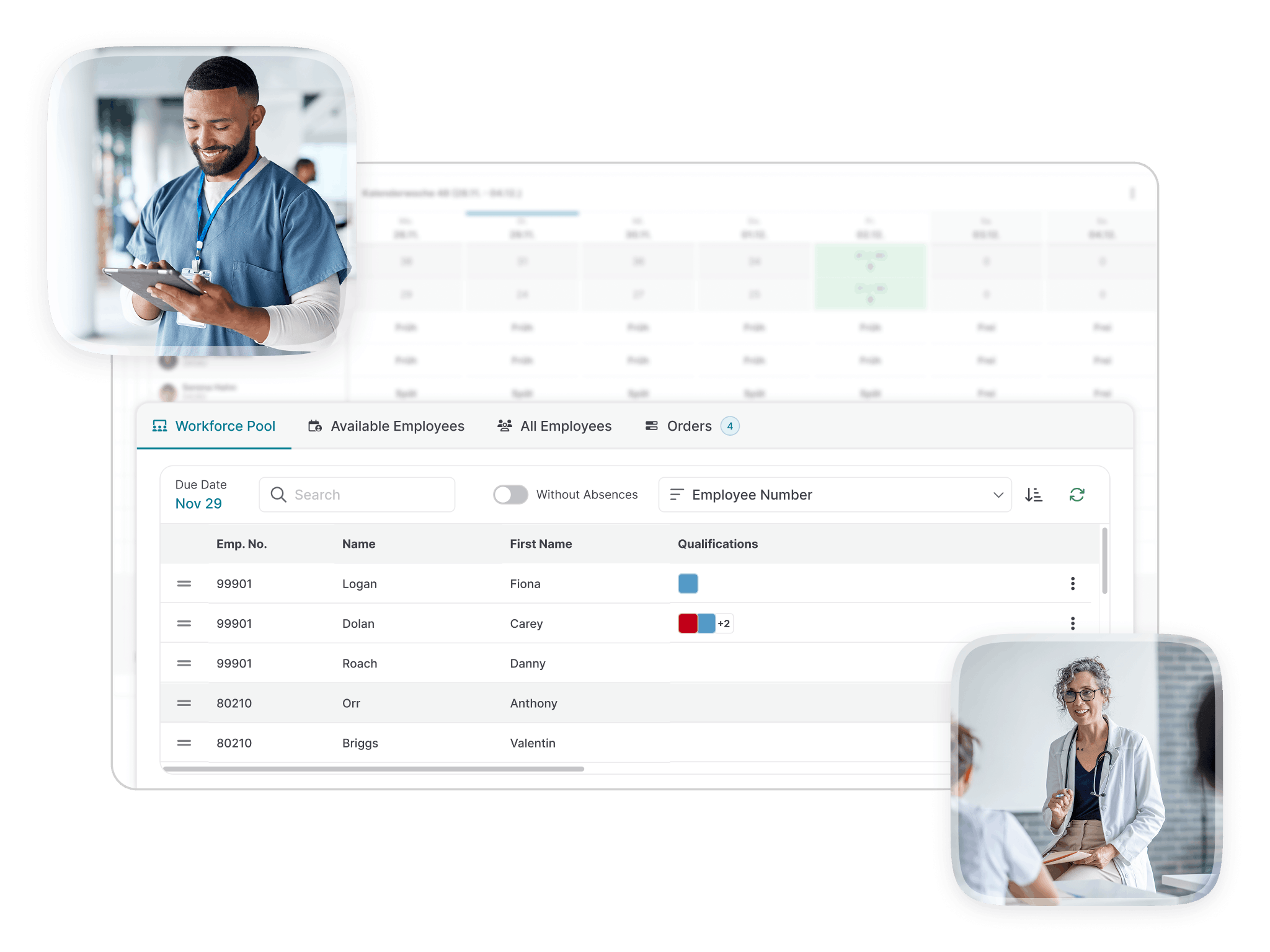
Centrally recorded information on vacation, sick leave, and other absences is immediately available for workforce scheduling.
Automated Replacement Suggestions
Suitable employees for open shifts are suggested automatically based on relevant scheduling information, reducing manual coordination.
Digital Float Pool
Float pool employees can be managed centrally and integrated directly into workforce scheduling. This supports flexible absence management in healthcare and helps compensate for staff shortages quickly.
Mobile Availability Requests
Mobile availability requests and centrally recorded responses simplify communication and accelerate the process of filling open shifts.
Centralized Workforce Scheduling
Shift, hour, and absence planning come together in one central platform, creating the basis for transparent scheduling decisions.
Smart HR Analytics
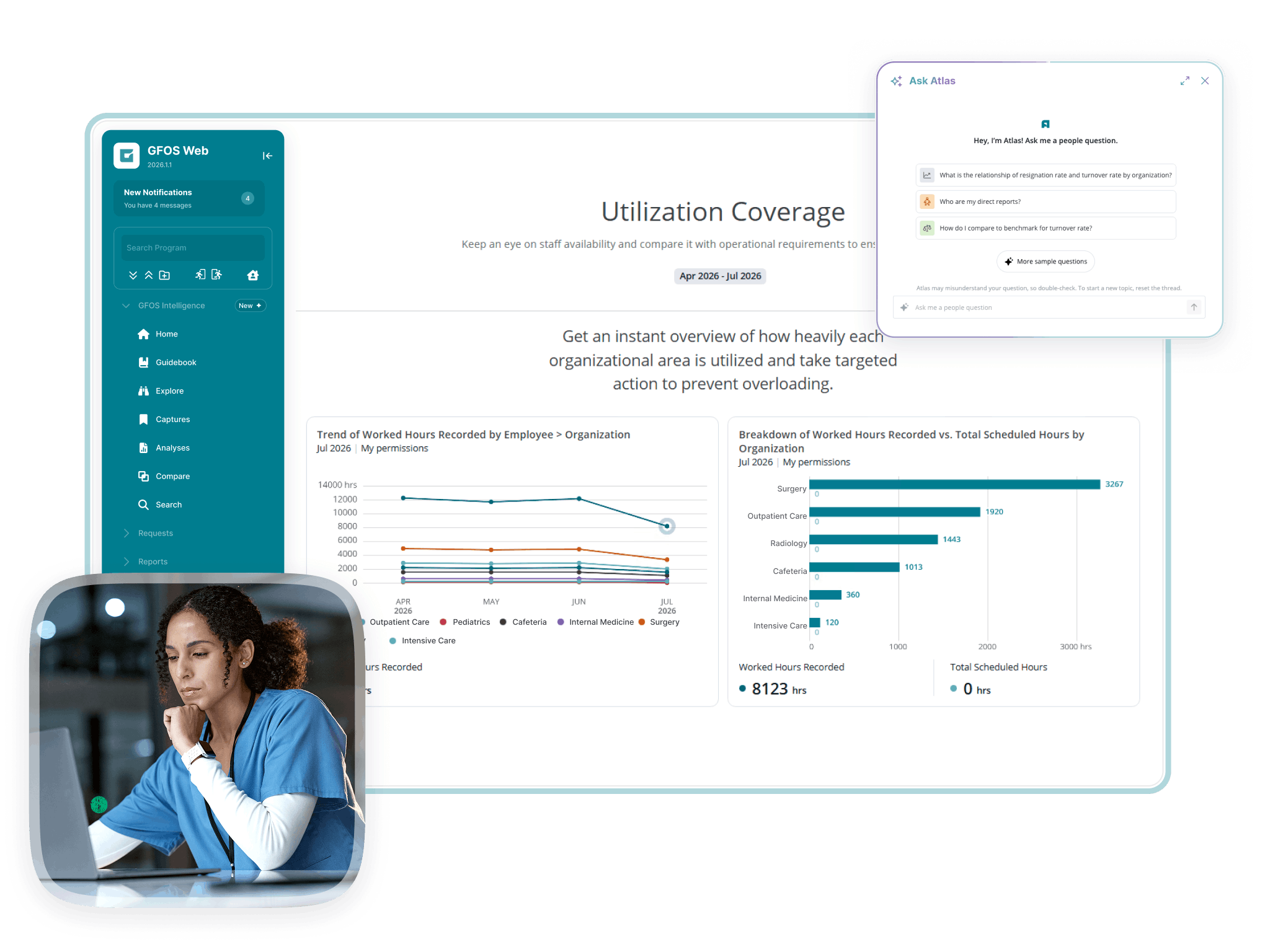
Metrics on sick leave, overtime, shift distribution, and workforce utilization are provided in clear reports that make emerging trends visible early.






How Float Pool Management in Nursing Homes Works With GFOS
Several absences within a short period mean that multiple shifts in the coming days are no longer adequately staffed. At the same time, the organization wants to avoid additional overtime and use existing staffing reserves as efficiently as possible. Nursing leadership is challenged by filling open shifts quickly while keeping team workloads under control.
GFOS in Practice
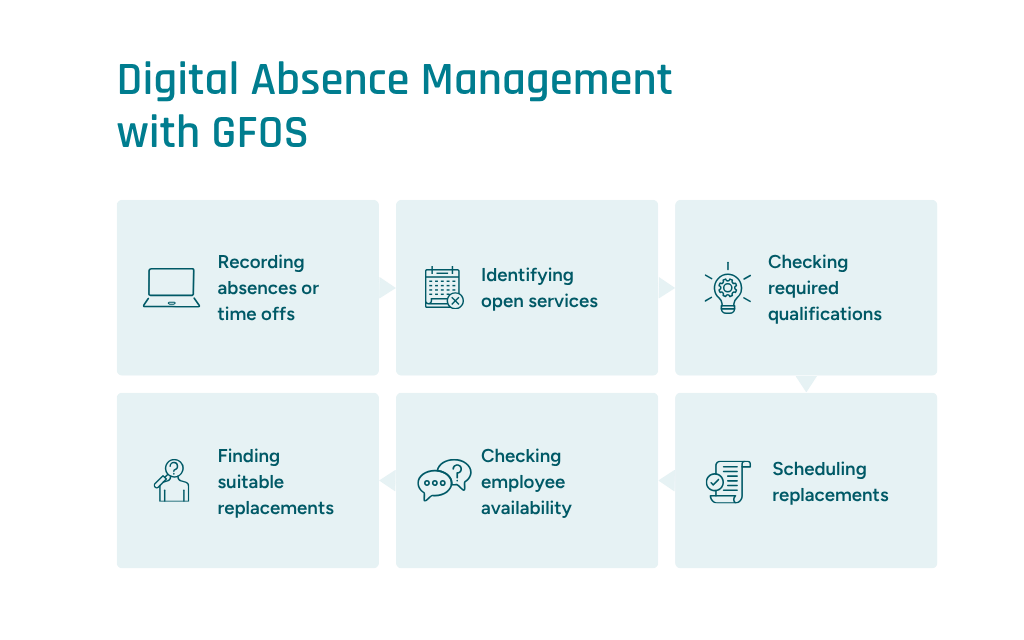
With GFOS, vacation, sick leave, and other absences are recorded centrally and factored into workforce scheduling. This makes it immediately clear which shifts and departments are affected by staff shortages.
Based on current scheduling information, the software automatically suggests suitable employees for open shifts. Staffing requirements, qualifications, shift models, and general availability are checked in the background. In addition, float pool employees can be included in absence management for nursing homes.
Mobile availability requests make it easy to coordinate quickly with potential replacements, while responses are documented centrally. Based on the positive responses, nursing leadership selects the final replacement employee and updates and publishes the schedule at the click of a button.
In addition, intelligent HR analytics provide transparency into sick leave rates, overtime, shift distribution, and workforce utilization. HR and workforce planning teams can identify areas that are particularly affected by absences, as well as rising workloads within individual teams, across locations, units, and care facilities.
Benefits of Software-Supported Float Pool Management in Healthcare
Structured float pool management gives healthcare organizations greater transparency into staffing gaps, availability, and workloads in individual departments. As a result, open shifts can be filled faster, staffing shortages can be addressed more effectively, and reliance on agency staffing can be reduced.
Key benefits at a glance:
- Meet minimum staffing requirements and target staffing levels
- Reduce extra work, double shifts, and additional workload in a targeted way
- Use internal staffing reserves and float pools more efficiently
- Identify absence patterns, sick leave rates, and workload trends early
- Reduce administrative tasks and coordination efforts in workforce scheduling
- Lower temporary and agency staffing costs over the long term
- Make informed decisions based on transparent metrics and up-to-date data
Discover our new packages
From simple staff scheduling to complex scenarios – workforce planning tailored to your needs.
Our Workforce Planning Bundles-
Base
Shift scheduling

Hour-based scheduling
Availability & requests

Service exchange platform
Cost-optimized scheduling
Staffing capacity planning
Automatic planning suggestion
Forecast
-
Professional
Shift scheduling
Hour-based scheduling
Availability & requests
Service exchange platform
Cost-optimized scheduling
Staffing capacity planning
Automatic planning suggestion
Forecast
-
Enterprise
Shift scheduling
Hour-based scheduling
Availability & requests
Service exchange platform
Cost-optimized scheduling
Staffing capacity planning
Automatic planning suggestion
Forecast
Explore the GFOS Software Suite



Would you like to learn more about GFOS software or receive additional information? Please feel free to contact us so we can discuss your needs together.
Contact