Scheduling Amid Labor Shortages, Quality of Care, and Fairness
Reliable patient care requires enough qualified employees to be available on the ward, in the operating room, or in other critical areas always. At the same time, shifts need to be distributed fairly, absences must be covered, and employee preferences should be considered. This balancing act makes healthcare scheduling increasingly complex.
Strict qualification requirements
Shifts cannot be staffed interchangeably. Advanced training, certifications, and other competencies determine which employees are eligible for specific tasks or areas. Keeping track of these requirements manually is hardly feasible in larger organizations.
High absence rates and last-minute changes
Sick leave, unplanned absences, and staffing gaps require short-term schedule adjustments. Especially in healthcare organizations, suitable replacements must be found quickly to protect quality of care and meet existing requirements.
Uneven employee workloads
Night, weekend, and holiday shifts are part of everyday healthcare operations and are not always distributed evenly. If certain employees repeatedly take on additional shifts and may exceed collectively agreed workload limits, motivation declines not only among the affected employees but also across the entire team.
Lack of transparency in scheduling decisions
It is often difficult to understand why certain employees are assigned to specific shifts while others are not. This can lead to discussions and tension within teams and make schedules harder to accept.








More Reliability and Fairness in Healthcare Scheduling With GFOS
Reliable workforce planning in healthcare requires informed decisions and up-to-date information. With GFOS, scheduling teams can consolidate all relevant data in one centralized platform, creating the foundation for transparent processes, faster workflows, and a better balance between organizational requirements and employee needs.
Qualification-based scheduling
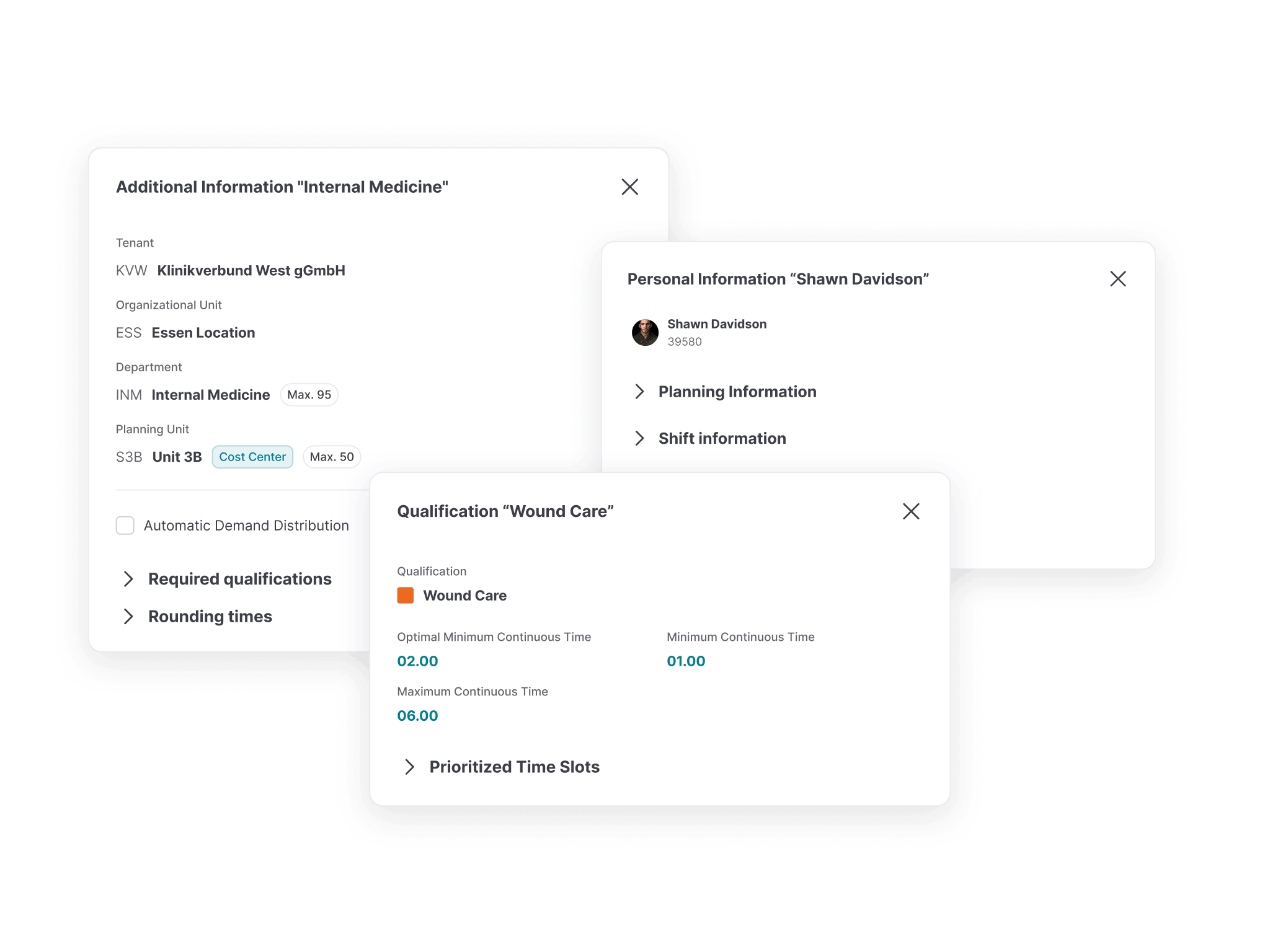
Workforce requirements relevant to scheduling are considered directly during the planning process, enabling employees to be assigned purposefully based on their competencies.
Centralized skill management
Qualifications and credentials are recorded and managed centrally. Notifications for expiring certifications or required refreshers help organizations meet qualification requirements over the long term and safeguard quality of care.
Consideration of employee preferences
Availability, preferred shifts, and individual preferences are incorporated into scheduling. This improves planning quality while supporting motivation, retention, and long-term employee satisfaction.
Short-term schedule adjustments
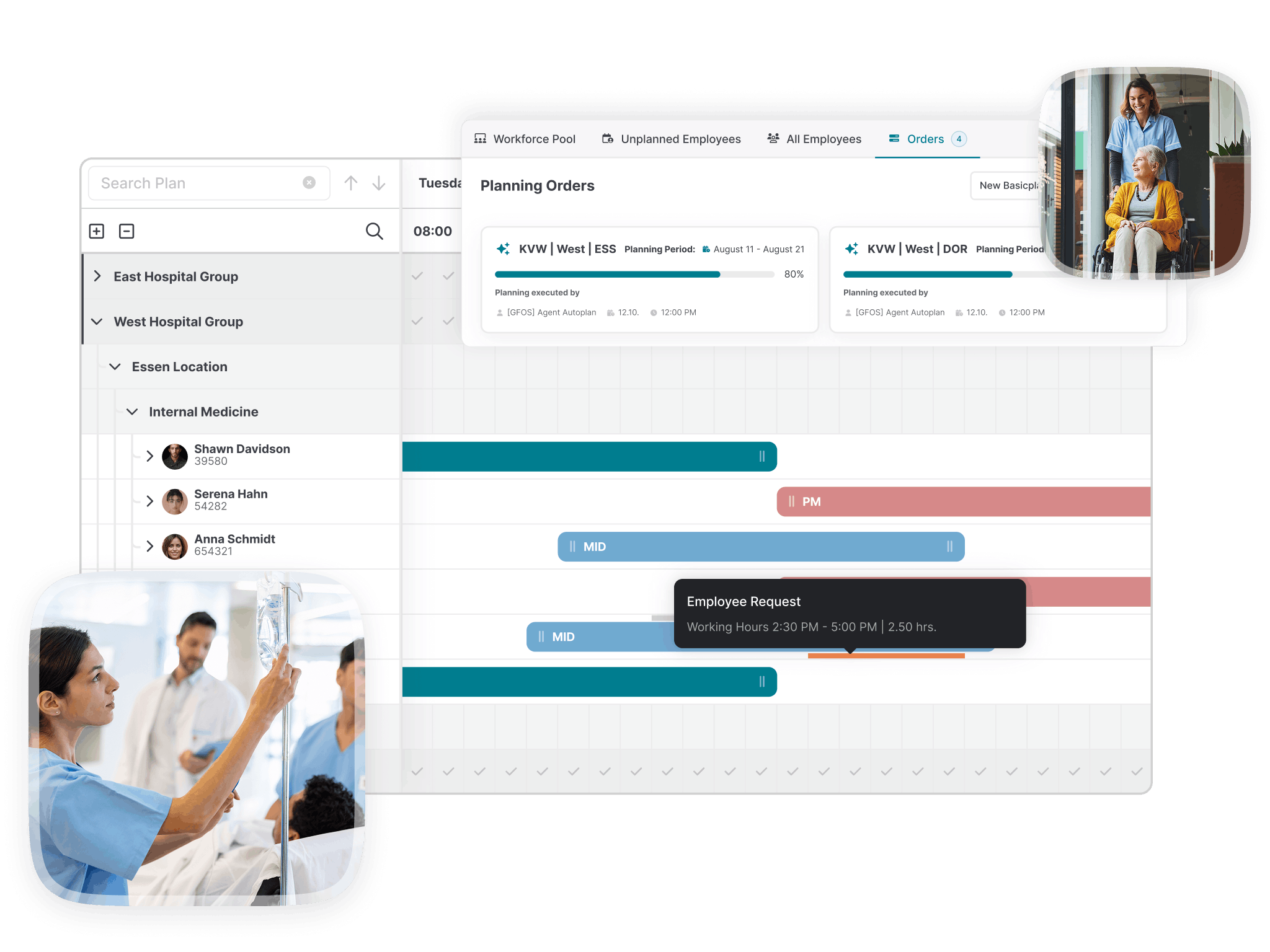
Visualized staffing gaps create transparency around critical coverage situations. Automated recommendations for suitable replacements and mobile availability requests help fill open shifts quickly and in line with qualification requirements.
Intelligent HR analytics
Workforce planning metrics help decision-makers assess shift distribution objectively and identify workload imbalances early. Insights into minimum staffing levels, fairness indicators, overtime, and absence rates provide a reliable basis for transparent scheduling decisions.
Employee Self-Services
Digital self-services allow employees to submit shift preferences, report availability, and request shift swaps or absences. This shortens coordination processes, increases employee satisfaction, and reduces administrative workload in scheduling.
When Last-Minute Absences Meet Qualification Requirements
At a hospital, several sick leave notifications have already been submitted for the coming week. Specific qualifications are required for the shifts on the affected ward. The ward manager needs to decide how coverage for the following days can be secured without placing additional strain on individual employees or jeopardizing minimum staffing requirements on other days.
GFOS in Practice
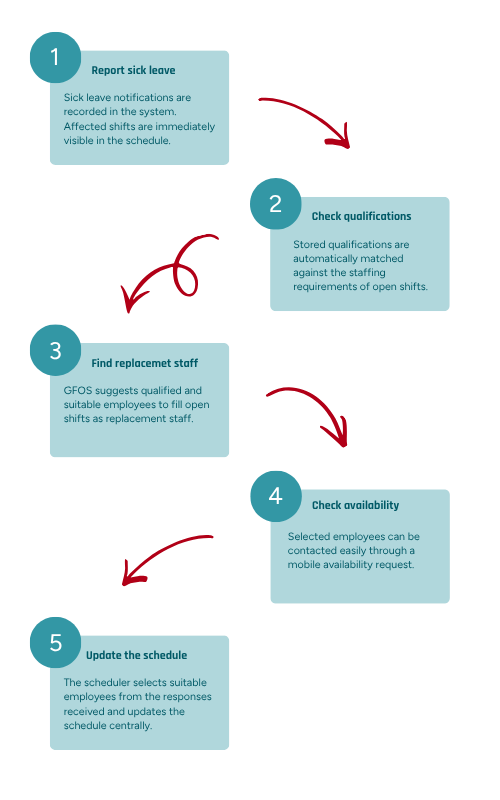
Sick leave notifications are recorded in the system. The system visualizes open shifts and potential staffing gaps, making it clear several days in advance which shifts are critically staffed and where action is needed.
Healthcare scheduling supports planners in finding replacement employees through automated recommendations. The software checks in advance which employees meet the professional requirements and are generally available.
In addition, the ward manager can use HR analytics to review information on shift distribution, overtime, and fairness indicators and immediately identify which employees, for example, have been assigned to weekends more often than average. This ensures that further planning is not only qualification-based, but also fair.
Based on this comprehensive data, scheduling managers can select suitable employees from the recommendations and contact them via a mobile availability request. Positive responses are displayed directly and can be transferred into the schedule once selected. The updated schedule is immediately available online to everyone involved.
How Hospitals Benefit From Qualification-Based Scheduling
When qualifications, availability, preferences, and other scheduling-relevant information are brought together centrally, hospitals and other healthcare organizations benefit on multiple levels.
Key Benefits at a Glance:
- Reliably meet qualification requirements
- Comply with staffing requirements
- Maintain quality of care over the long term
- Identify staffing gaps early
- Distribute shifts more equitably
- Strengthen employee satisfaction
- Reduce scheduling effort
- Make data-driven and transparent decisions
Discover our new packages
From simple staff scheduling to complex scenarios – workforce planning tailored to your needs.
Our Workforce Planning Bundles-
Base
Shift scheduling

Hour-based scheduling
Availability & requests

Service exchange platform
Cost-optimized scheduling
Staffing capacity planning
Automatic planning suggestion
Forecast
-
Professional
Shift scheduling
Hour-based scheduling
Availability & requests
Service exchange platform
Cost-optimized scheduling
Staffing capacity planning
Automatic planning suggestion
Forecast
-
Enterprise
Shift scheduling
Hour-based scheduling
Availability & requests
Service exchange platform
Cost-optimized scheduling
Staffing capacity planning
Automatic planning suggestion
Forecast
Explore the GFOS Software Suite





Recommended Content for You

Would you like to learn more about GFOS software or receive additional information? Please feel free to contact us so we can discuss your needs together.
Contact