When Production, Availability, and Qualifications Do Not Align
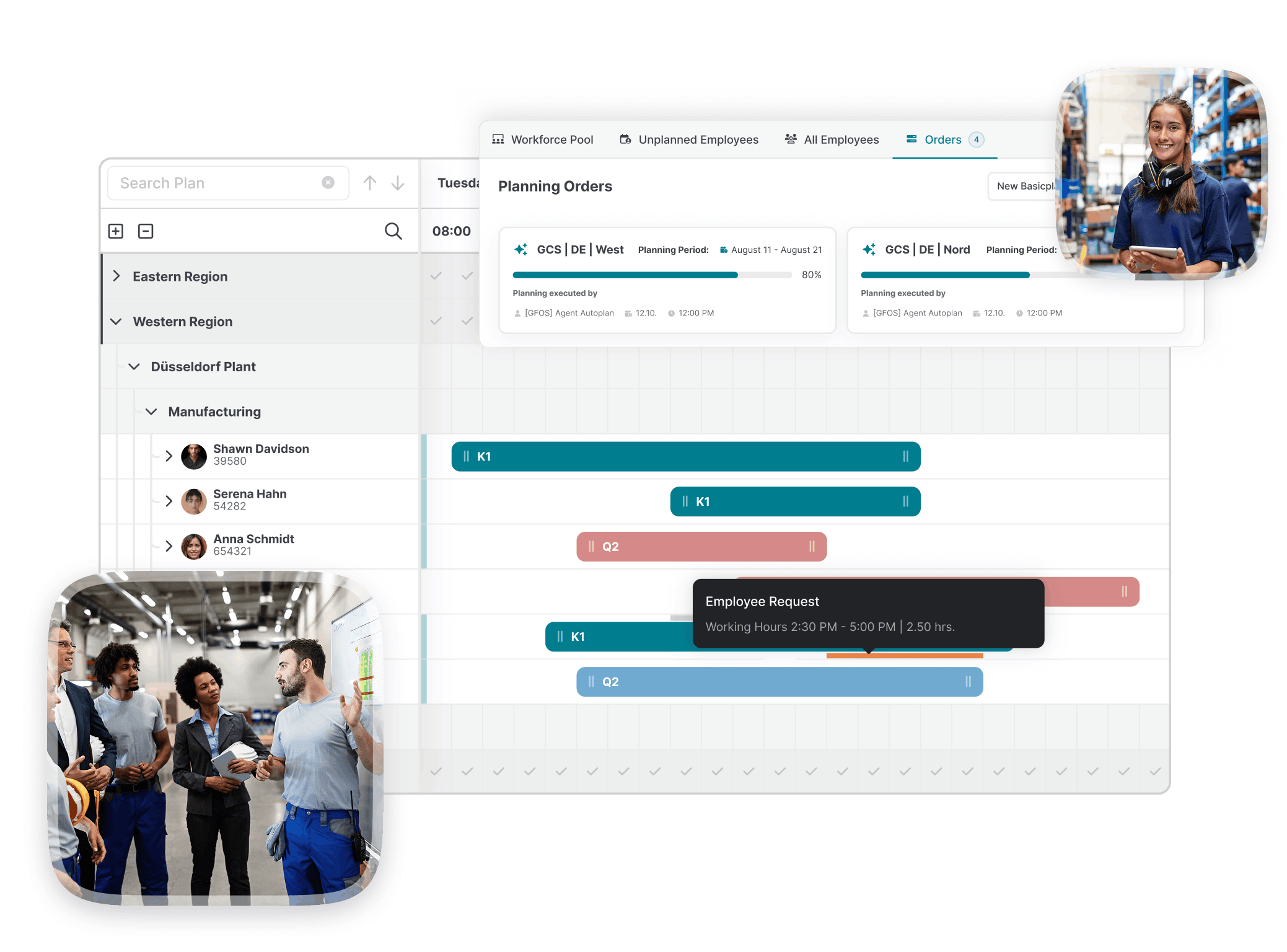
Production managers are responsible for planning shifts in a way that keeps production lines and machines running reliably and efficiently, even when staffing needs change, rules are complex, and operations are disrupted at short notice. Manual planning approaches quickly reach their limits in these situations.
- Complex shift patterns in manufacturing: Multi-shift systems, rotating schedules, and overlapping shifts increase planning effort and make adjustments more prone to errors.
- Qualification-critical workstations: Operating machines and equipment requires specific qualifications that must be reliably reflected in the shift schedule.
- Fluctuating staffing needs: Production volumes, order situations, or disruptions lead to short-term adjustments that require flexible workforce scheduling during ongoing operations.
- Short-notice staff absences: Illness-related absences and unplanned time away make rigid shift schedules unusable in manufacturing and put delivery deadlines at risk.
- Manual and isolated planning processes: Excel spreadsheets or paper-based workflows create a lack of transparency, increase the risk of errors, and make production-ready planning more difficult.
Production-Oriented Shift Planning With GFOS
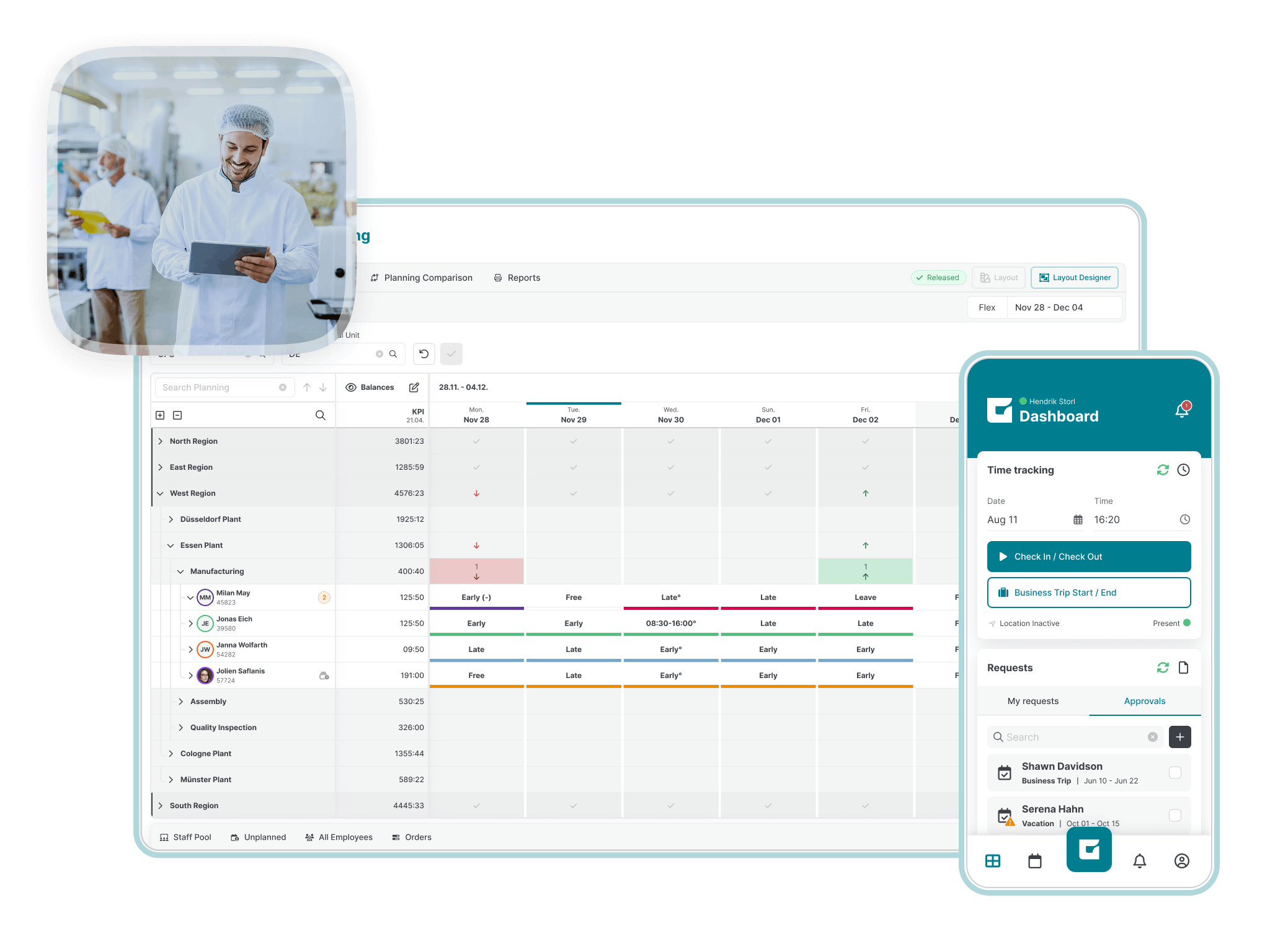
Rigid shift schedules do not reflect the reality of manufacturing. When production requirements, staff availability, and qualifications are constantly changing, companies need dynamic planning that makes it possible to adjust shifts comfortably and based on defined rules, reliably map complex shift patterns in manufacturing and short-notice changes, and keep production lines running steadily under changing conditions.
Key Features for Manufacturing
GFOS combines flexible shift planning for manufacturing with the real-world requirements of the shop floor. In combination with GFOS.Smart Manufacturing, companies gain a comprehensive view of employees, qualifications, and manufacturing processes for adaptable and efficient operations.
Flexible shift patterns and rotations
Mapping of multi-shift systems, including rotating shift sequences and short-notice adjustments.
Workstation reference in the shift schedule
Planning based on existing workstations instead of purely employee-based scheduling.
Integrated qualification and assignment checks
Automatic consideration of qualifications, shift patterns, and availability directly in the shift schedule.
Reliable planning for short-notice absences
Transparent impact of absences and fast automated replacement planning.
Rule-based and legally compliant planning
Consideration of working time rules and rest periods as well as collective agreements and company agreements in workforce scheduling.
Transparency across staffing and bottlenecks
Early detection of understaffing, overstaffing, or incorrect staffing in workforce scheduling across production.
Transparency across production status
Integration of machine and operational data shows where interventions, maintenance, or adjustments are required.
Consideration of material and quality requirements
Inclusion of information on material availability and quality assurance for realistic and executable planning.
Central overview
Overview of all relevant production and HR data in the MES dashboard for well-founded decisions in near real time.
Stable Shift Planning Despite Disruptions in Manufacturing
On Monday morning, the first notifications come in at the start of the early shift: An experienced machine operator is absent due to illness. At the same time, the MES dashboard shows increased utilization on a key production line. Another piece of equipment has limited availability due to scheduled maintenance.
While the current shift initially must handle the situation operationally at short notice, the real challenge begins for production management: How can the next shifts be adjusted so that production continues to run smoothly? Which qualified replacements are available? And where will bottlenecks occur if the team does not plan now?
With GFOS, the Process Runs in a Structured Way
The current situation is recorded in the system, including the sick leave notification and changed requirements. Based on this, shift planning for manufacturing immediately shows where action is needed for the upcoming shifts, making bottlenecks visible at an early stage.
For subsequent shifts, the system displays a list of suitable employees while taking qualifications, availability, and assignment rules into account.
Production management can adjust the shift schedule in a targeted way: A qualified employee is scheduled for the critical position in the next shifts, and staffing needs for the production line are increased proactively to absorb rising utilization. Maintenance work and reduced machine availability can also be considered in planning.
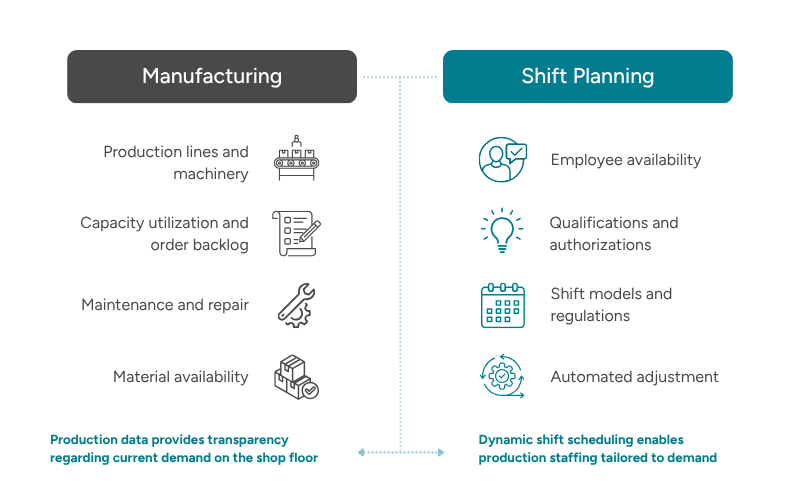
The result: The adjustments are immediately transparent and understandable for everyone involved. The impact of the sick leave notification is managed in a controlled way across the next shifts, bottlenecks are mitigated at an early stage, and the production lines continue running reliably.
Production managers do not wait to respond until problems have already occurred. Instead, they plan based on current production data and shift planning that makes it possible to act flexibly when conditions change.
Benefits of Dynamic Shift Planning in Manufacturing
Production managers need one thing above all: planning reliability during ongoing operations. Innovative shift planning in manufacturing combined with a powerful MES system creates the foundation for this.
The benefits at a glance:
- Greater planning reliability during ongoing operations through proactive and flexible shift organization
- Stable production lines even when staff availability fluctuates
- Qualification-based staffing for all workstations
- Fast response to disruptions, absences, and short-notice adjustments
- Reduction of unplanned downtime through better coordination of employees and production
- Greater transparency across staffing, bottlenecks, and required action on the shop floor
- Efficient collaboration between manufacturing, HR, and planning through a central data basis
- Relief for responsible teams through automated, rule-based planning processes
Discover our new packages now
From simple staff scheduling to complex scenarios – workforce planning tailored to your needs.
Our Workforce Planning Bundles-
Base
Shift scheduling

Hour-based scheduling
Availability & requests

Service exchange platform
Cost-optimized scheduling
Staffing capacity planning
Automatic planning suggestion
Forecast
-
Professional
Shift scheduling
Hour-based scheduling
Availability & requests
Service exchange platform
Cost-optimized scheduling
Staffing capacity planning
Automatic planning suggestion
Forecast
-
Enterprise
Shift scheduling
Hour-based scheduling
Availability & requests
Service exchange platform
Cost-optimized scheduling
Staffing capacity planning
Automatic planning suggestion
Forecast









Would you like to learn more about GFOS software or receive additional information? Please feel free to contact us so we can discuss your needs together.
Contact