Between Planning, Availability, and Reality
Manufacturing companies face the challenge of aligning workforce, processes, and requirements reliably during ongoing operations. Dynamic conditions, growing complexity, and limited transparency across relevant data often create additional effort and make precise operational control difficult.
Typical challenges in day-to-day production:
Limited control during ongoing operations
Fragmented or delayed data combined with large data volumes prevents a clear overview of workforce, machines, and orders, forcing production leaders to make mostly reactive decisions.
Increasing complexity alongside efficiency pressure
Complex shift patterns, volatile order volumes, and growing requirements increase planning and control effort while putting operational efficiency under pressure.
Disconnect between the shop floor and management level
Incomplete or delayed feedback from production creates gaps between plans and reality and limits well-informed decision-making.
Labor shortages and qualification bottlenecks
Limited staffing resources and a lack of transparency around qualifications make efficient workforce deployment more difficult and can put stable production planning at risk.
Media discontinuities and system silos
Separate systems and missing integrations create inconsistent data, duplicated maintenance effort, and a fragmented view of processes.
High administrative workload instead of value creation
Manual processes and complex coordination tie up resources and shift focus away from operational control and optimization.
Security and compliance risks on site
Unclear access and attendance situations as well as incomplete documentation increase risks and stand in the way of secure, compliant operations.




How GFOS Workforce Management for Manufacturing Delivers Value
To deploy employees efficiently and in line with demand in manufacturing, companies need innovative solutions that bring all HR processes together in one centralized system. This is exactly where the GFOS workforce management platform comes in: the software creates a unified foundation for employee scheduling, time tracking, and payroll and collective agreement evaluation while providing transparency across availability, capacities, and deployment locations.
With modular expansion through access control and a powerful manufacturing execution system, companies can build a software landscape that connects HR, production, and security in line with the requirements of industrial operations.
Key Features for Production
The following GFOS Workforce Management features enable precise employee scheduling, transparent time tracking, and efficient control of your production processes:
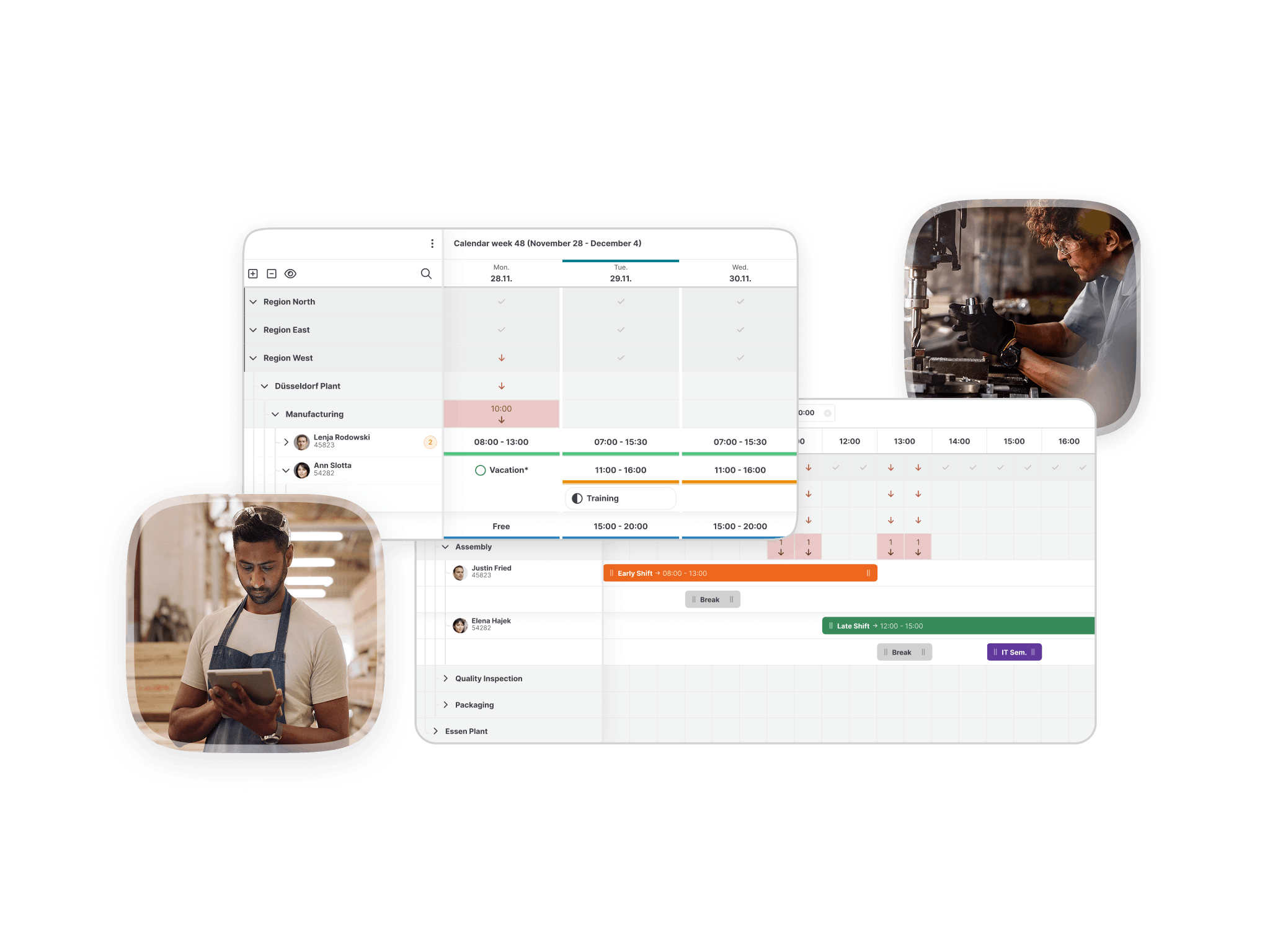
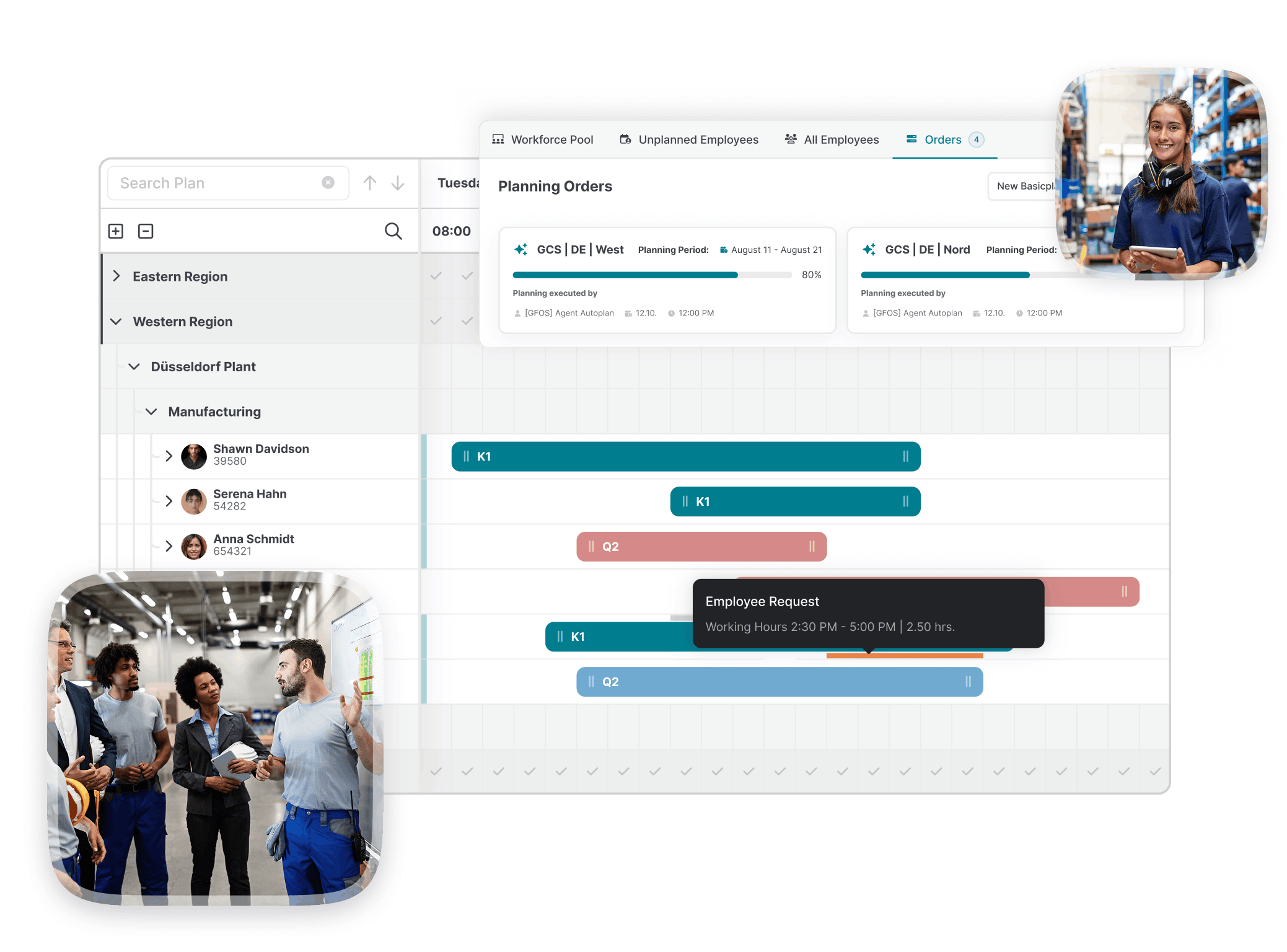
Dynamic shift planning
Map complex shift patterns and flexibly adjust schedules to availability, working time rules, and operational requirements.
Flexible time tracking
Reliably capture working and absence times via terminal, app, web application, or terminal app: in production, on the factory site, or in the production office.
Demand- and qualification-based staffing
Assign employees to specific staffing needs based on qualifications, availability, and order situation to avoid understaffing, overstaffing, and mismatches.
Workstation-based employee scheduling
Plan employee assignments directly along workstations and align staffing precisely with production requirements.
Fast response to absences
Identify absences and bottlenecks early and adjust shift schedules quickly and efficiently when changes occur.
Complex payroll and collective agreement evaluation
Automatically evaluate working times according to complex collective agreements, works agreements, and individual rules, including premiums and seamless transfer to payroll systems.
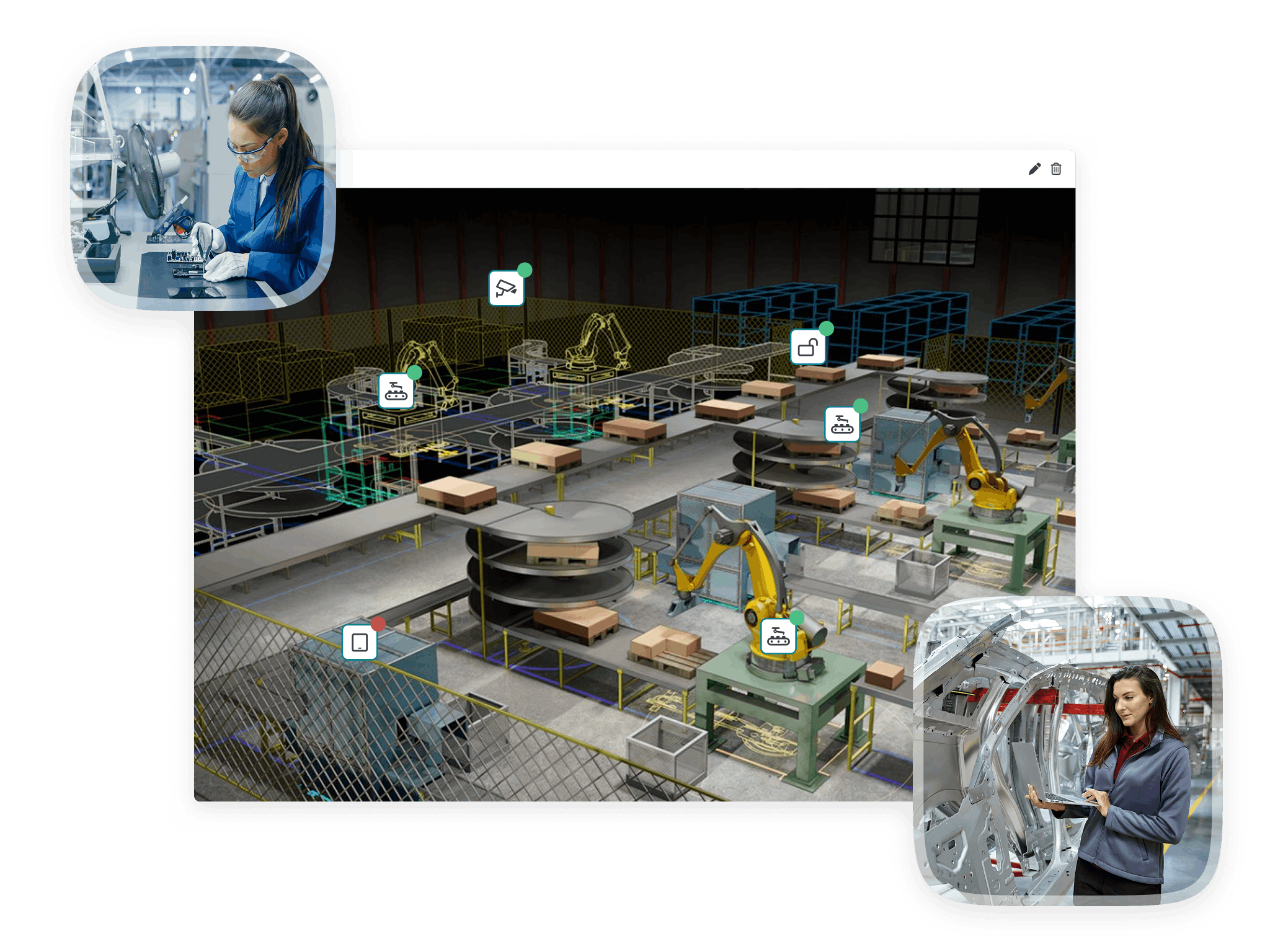
Powerful MES
Digitally map production processes, capture production and machine data, and sustainably optimize manufacturing workflows with comprehensive analyses.
Expandable access control
Securely manage and transparently document access for employees, suppliers, and visitors to the factory site, buildings, and sensitive areas.
Digital evacuation management
Create up-to-date evacuation lists with live data via app and, in an emergency, identify who is on site at any time, even offline.
Stable Shift Planning for Reliable Production Control
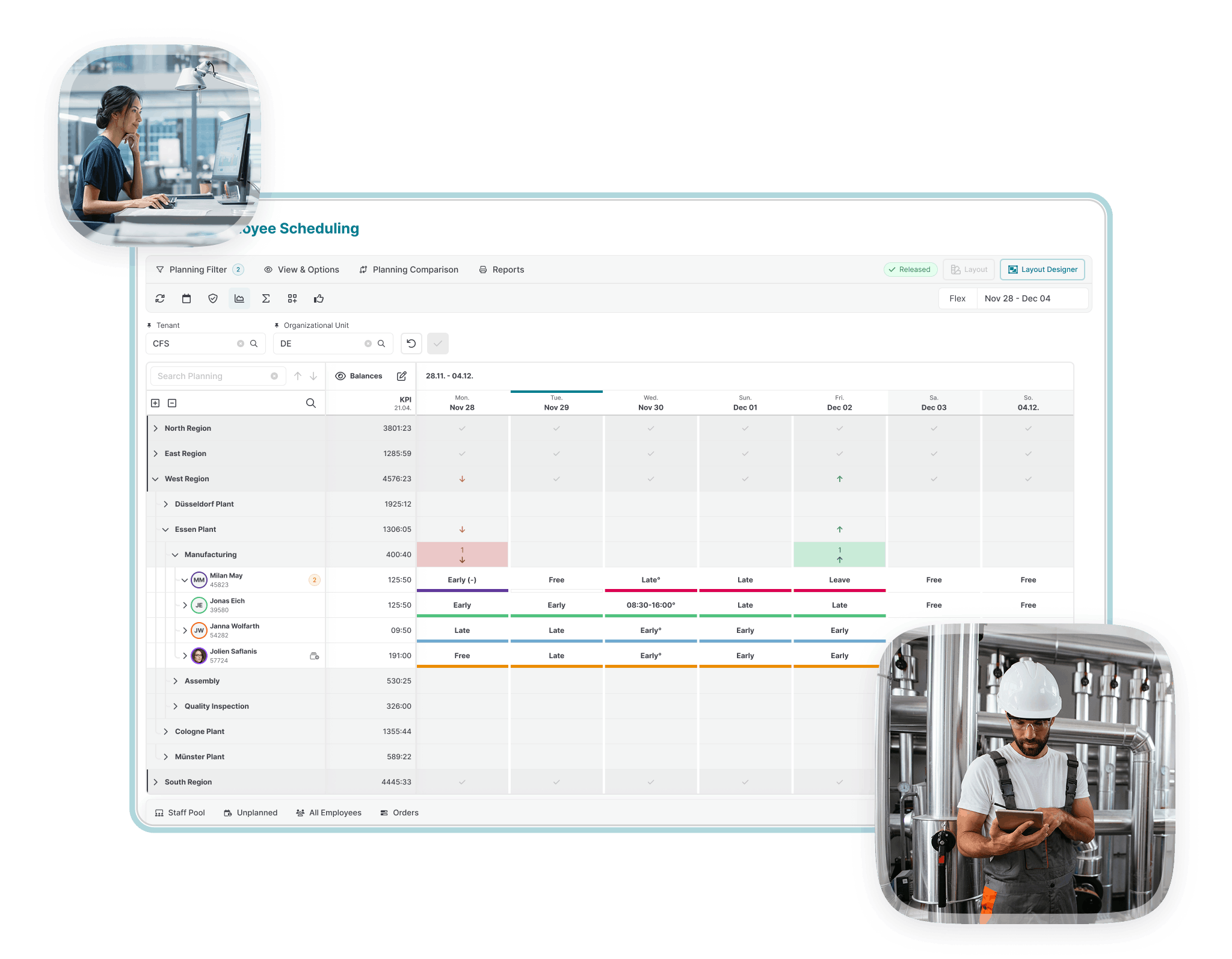
In production, reliable shift planning is essential for smooth operations. With powerful employee scheduling, GFOS maps complex shift patterns with ease and enables flexible adjustments to changing requirements without jeopardizing stability in manufacturing.
- Mapping of complex multi-shift systems and individual working time models
- Consideration of legal requirements, collective agreement rules, and company agreements
- Planning along workstations and production areas rather than solely by employee
- Transparent overview of staffing levels and potential bottlenecks
- Reduced workload for planners through rule-based and automated processes
High Responsiveness to Short-Term Changes
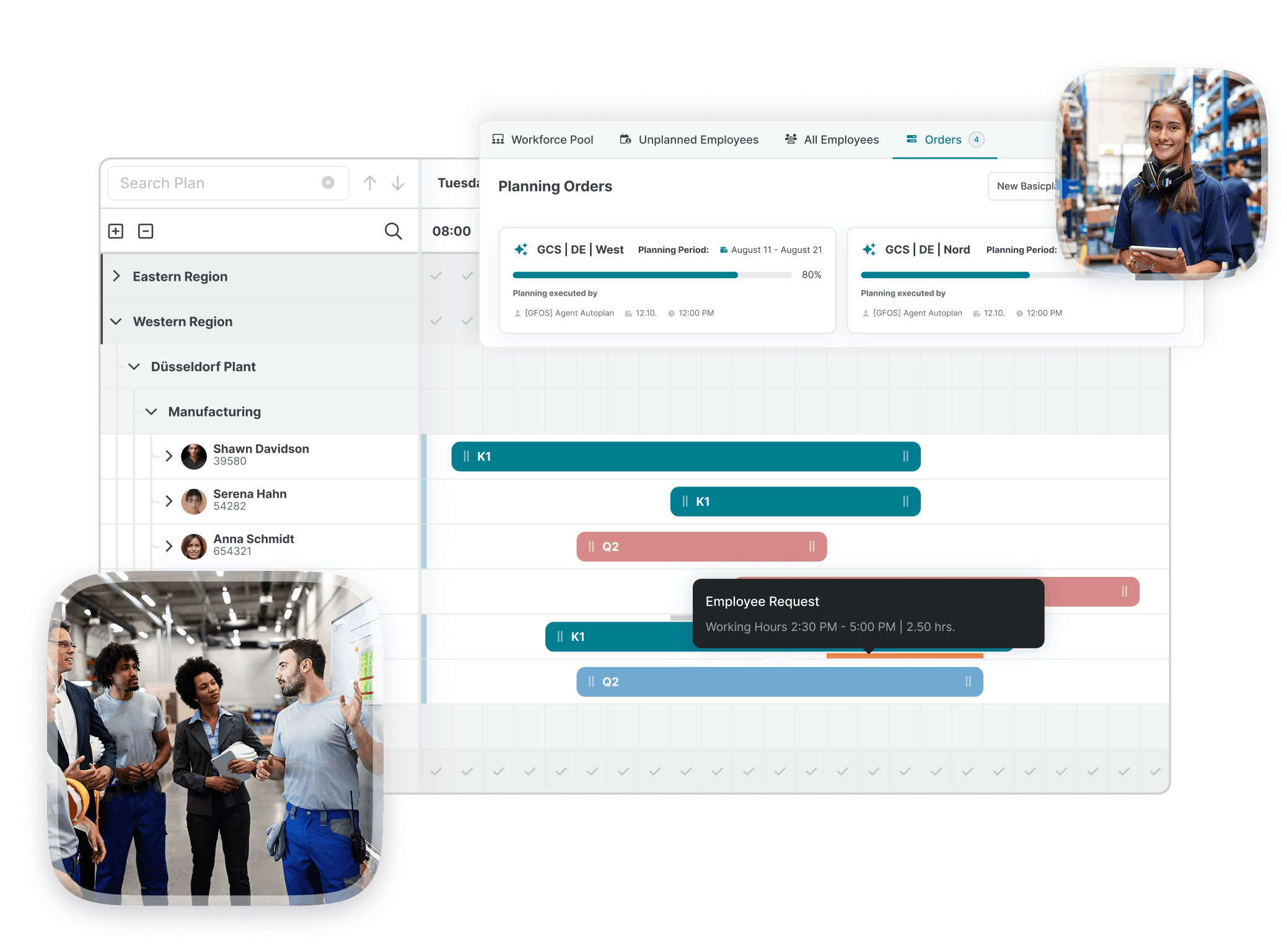
Whether unexpected absences, staffing bottlenecks, or fluctuating order volumes arise, manufacturing companies need to respond flexibly at any time. Workforce management for manufacturing helps shift supervisors and plant managers react to these changes quickly and in a structured way.
- Fast adjustment of shift and deployment plans in response to absences and changing order volumes
- Transparent visibility into the impact of changes on staffing and capacity
- Support in finding suitable replacements through automated scheduling recommendations
- Reduced production risks through early rescheduling
- Process stability even under dynamic conditions
Reliable Time Tracking Across All Areas
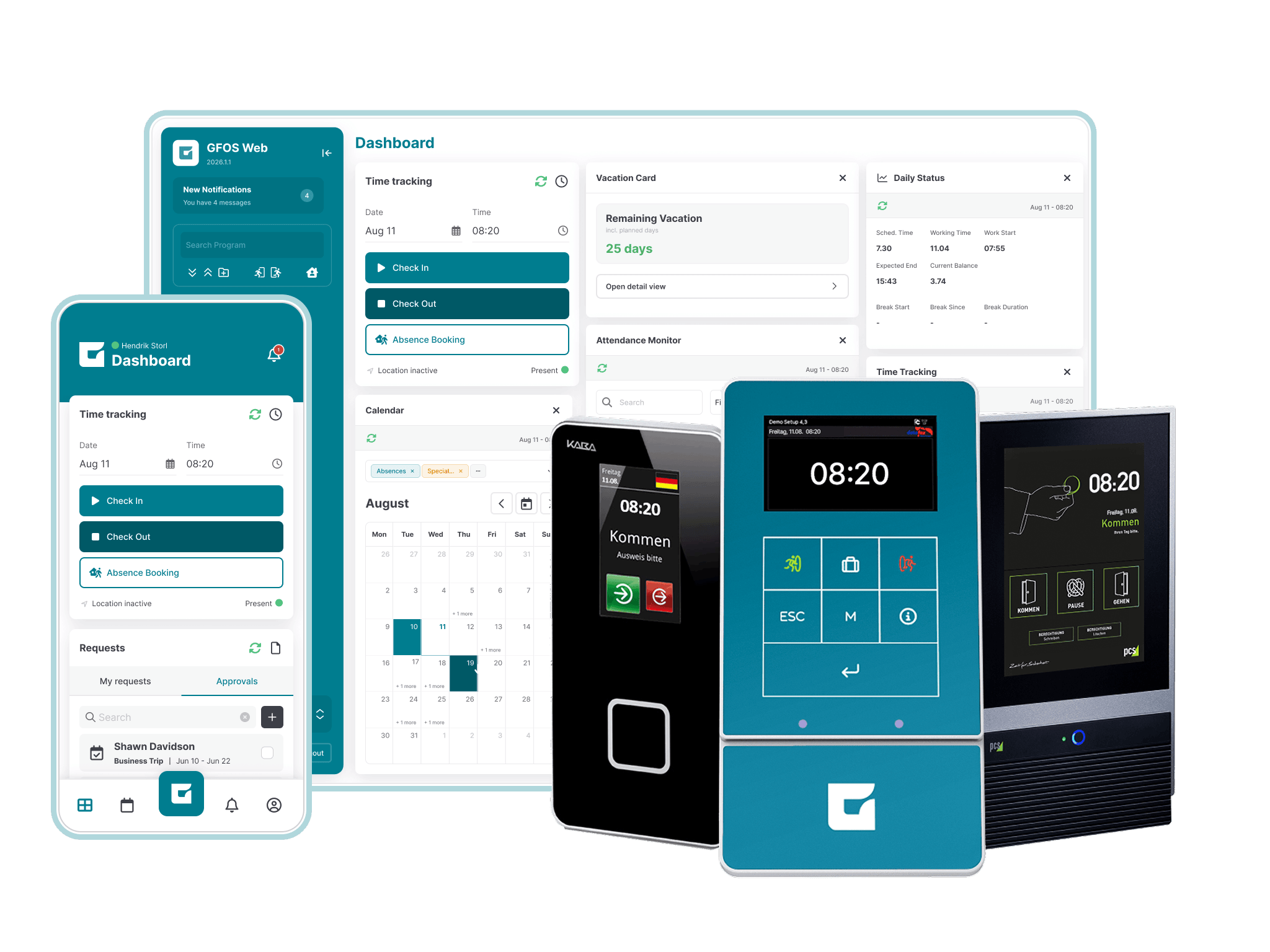
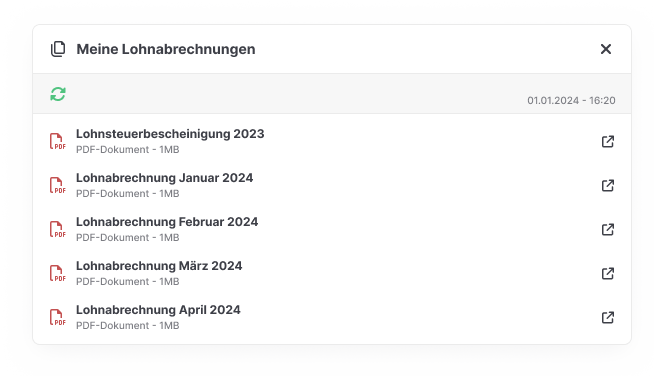
Precise working time tracking forms the basis for reliable planning and payroll in production. Flexible capture options make it possible to cover different working environments across the factory site, while all premiums are calculated automatically and transferred to payroll via interface.
- Complete and compliant capture of all working and absence times
- Flexible capture via terminal, web application, app, or terminal app
- Automatic consideration of premiums, working time models, and absences
- Reliable basis for payroll processes and comprehensive reporting
- Reduction of manual, error-prone workflows
Automated Evaluation of Complex Collective Agreements
Industrial companies need to accurately map different collective agreements, works agreements, and compensation models. GFOS Workforce Management enables rule-based evaluation of all working times, from premiums to individual special rules, and ensures that data is transferred reliably to existing payroll systems without media discontinuities.
- Rule-based mapping of complex collective agreements, works agreements, and company-specific compensation models
- Consistent evaluation regardless of location, department, or shift pattern
- Avoidance of payroll errors through standardized, system-supported evaluation logic
- Fast adaptation to new collective agreement and company rules
- Reduced workload for HR and payroll through fewer manual corrections and automated processes
Workforce Management for Manufacturing in Practice
Every manufacturing environment has its own requirements for workforce deployment, from stable shift planning and precise capture of order-related times to secure access management on the factory site. Our use cases show how workforce management for manufacturing is applied in practice and how you can optimize and connect key processes in a targeted way.

Our success storys
Explore the GFOS Software Suite





Answers to Your Questions
By considering qualifications and specific staffing requirements, employees can be assigned to the right workstations in a targeted way. This helps ensure that production requirements are met reliably.
All premiums, such as those for night shifts, shift work, or industry-specific requirements, are calculated automatically based on stored rule sets and transferred to payroll through a standardized interface.
GFOS can be integrated into existing ERP and HCM systems such as SAP, DATEV, or Microsoft Dynamics through numerous interfaces. Common industrial standards, such as OPC UA, as well as shop floor interfaces are also supported so data from production equipment can be used and incorporated into workforce processes without media discontinuities.
GFOS.Smart Manufacturing provides a clear overview of the current production status using machine data, production data, and additional information, making it easier to identify where action is needed. Qualified and available employees can then be scheduled specifically for open tasks.



Would you like to learn more about GFOS software or receive additional information? Please feel free to contact us so we can discuss your needs together.
Contact