
Between Rush Hours, Staff Shortages, and Flexible Work Schedules
Customer foot traffic, seasonal promotions, and flexible employment models shape the day-to-day operations of the retail industry. For HR managers, store managers, and regional managers, this means that staffing must be planned precisely, adjusted on short notice, and at the same time organized in a fair and legally compliant manner. Without the digital support of workforce management solutions designed for the retail sector, this is virtually impossible.
Typical challenges in the retail industry include:
Fluctuating customer traffic and peak times
Whether it’s weekend business, promotional periods, or seasonal peaks - demand in retail is constantly changing. To avoid overstaffing or understaffing, scheduling managers must be able to adjust staffing levels flexibly.
Seasonal peaks and last-minute changes
Staffing needs increase significantly, especially during peak periods such as the holiday season or major sales events. At the same time, sick leave and unexpected absences require quick adjustments to the work schedule.
High proportion of flexible employees
Part-time employees, temporary workers, and those in mini-jobs are a common feature of the retail sector. While they provide the necessary flexibility, the variety of work schedules, contract types, and individual availability significantly increases the coordination effort.
Employee preferences and availability
Achieving a better work-life balance is becoming increasingly important these days. Preferences regarding shifts, days off, or preferred working hours must be considered early on and transparently during staff scheduling.
Fair allocation of shifts and special assignments
Weekend work, Sunday shopping, or late shifts should be distributed as fairly as possible. This requires clear rules to ensure fairness within the team and avoid conflicts.
Centralized and decentralized store planning
Many retail companies operate many stores that are managed either centrally or decentralized. Both approaches require transparent processes and a unified database.
Further references




How GFOS's Workforce Management Solution Delivers Results in Retail
To meet these diverse requirements, companies need a solution that intelligently integrates workforce scheduling, time tracking, and analytics. With cloud-based workforce management solutions for the retail sector, retailers can schedule their employees according to demand, take individual work schedule preferences into account, and simultaneously ensure cost-effectiveness and compliance with legal requirements.
Key Features for Retailers
With the right features, you can easily manage work hours, rotating shifts, and temporary assignments:
Workforce Planning & Forecasting
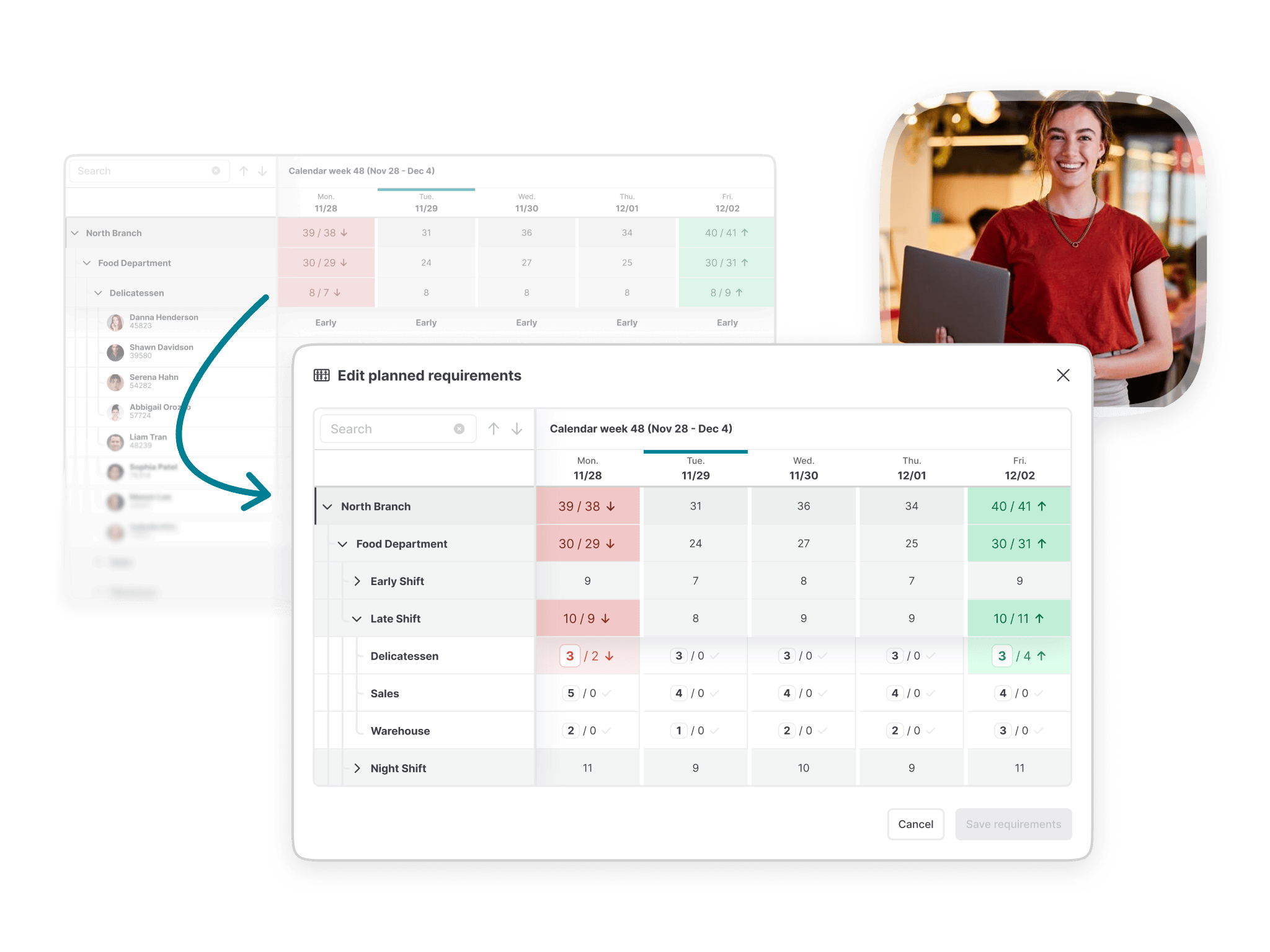
Automatically determine staffing needs based on customer traffic, peak hours, and seasonal factors
Flexible work schedules & time tracking
Take a comprehensive approach to different contract types, customized work schedules, and time tracking, and make them easier to plan
Centralized and decentralized store planning
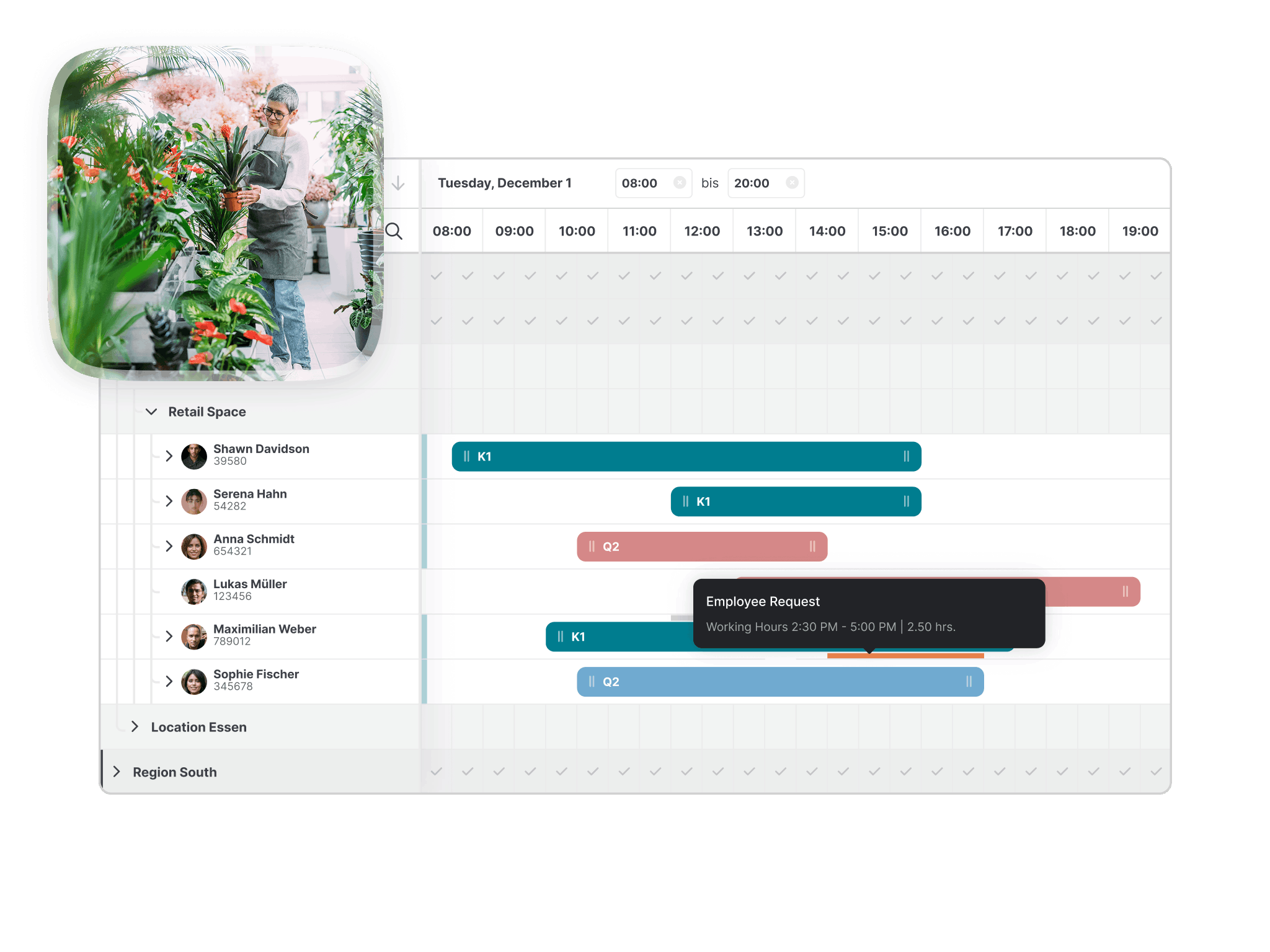
Schedule employees across locations or directly at the store - with a unified database and maximum transparency
Detailed scheduling
Respond precisely to fluctuations and plan staff assignments cost-effectively to meet exact demand, down to 15-minute intervals
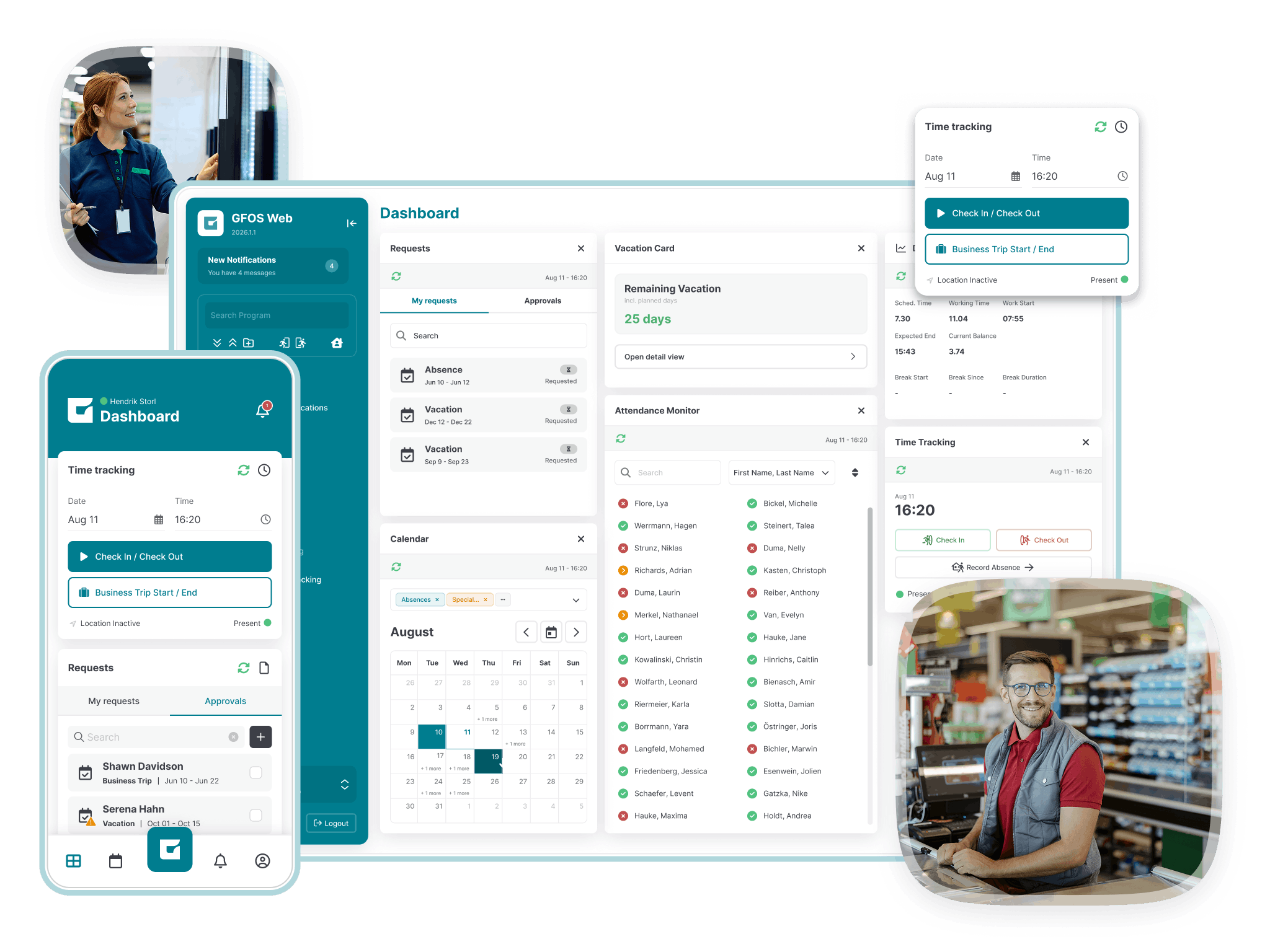
Mobile leave and vacation requests
Submit requests and requests paperlessly via employee self-service portal and check their status at any time -including approval levels and delegation rules
Integration of electronic sick leave certificates & absence management
Always keep track of sick leave reports and respond quickly to staff shortages, for example during outbreaks of illness
Smart people analytics
Analyze HR metrics in near real time, get answers to key questions - such as overtime distribution or store utilization - in natural language, and visualize them easily
Fairness principle & request lists
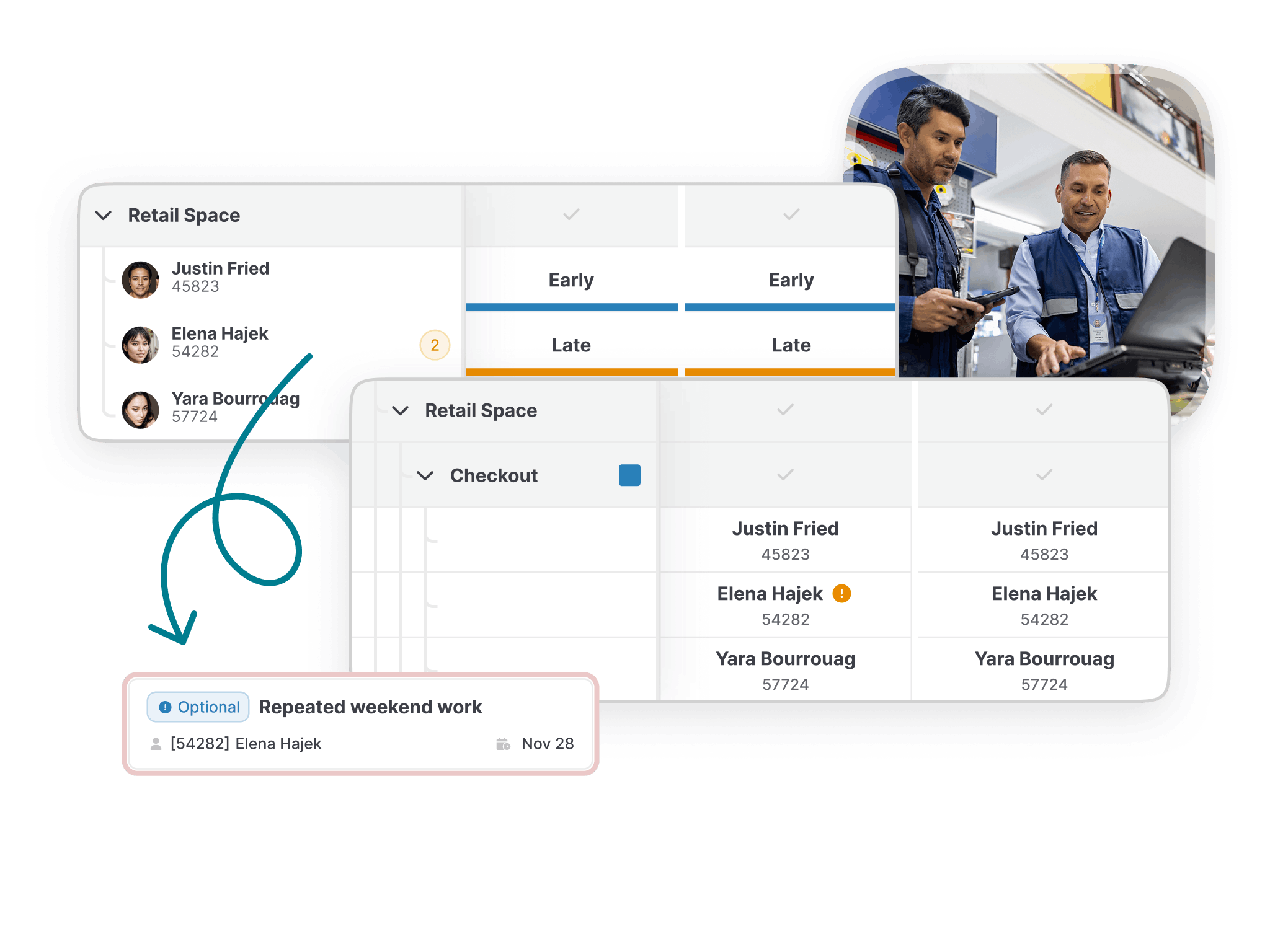
Planning staff assignments fairly and according to established rules - to ensure a fair and transparent distribution of weekend work, late shifts, and special shifts, while taking employee preferences into account
Long-term planning & short-term flexibility
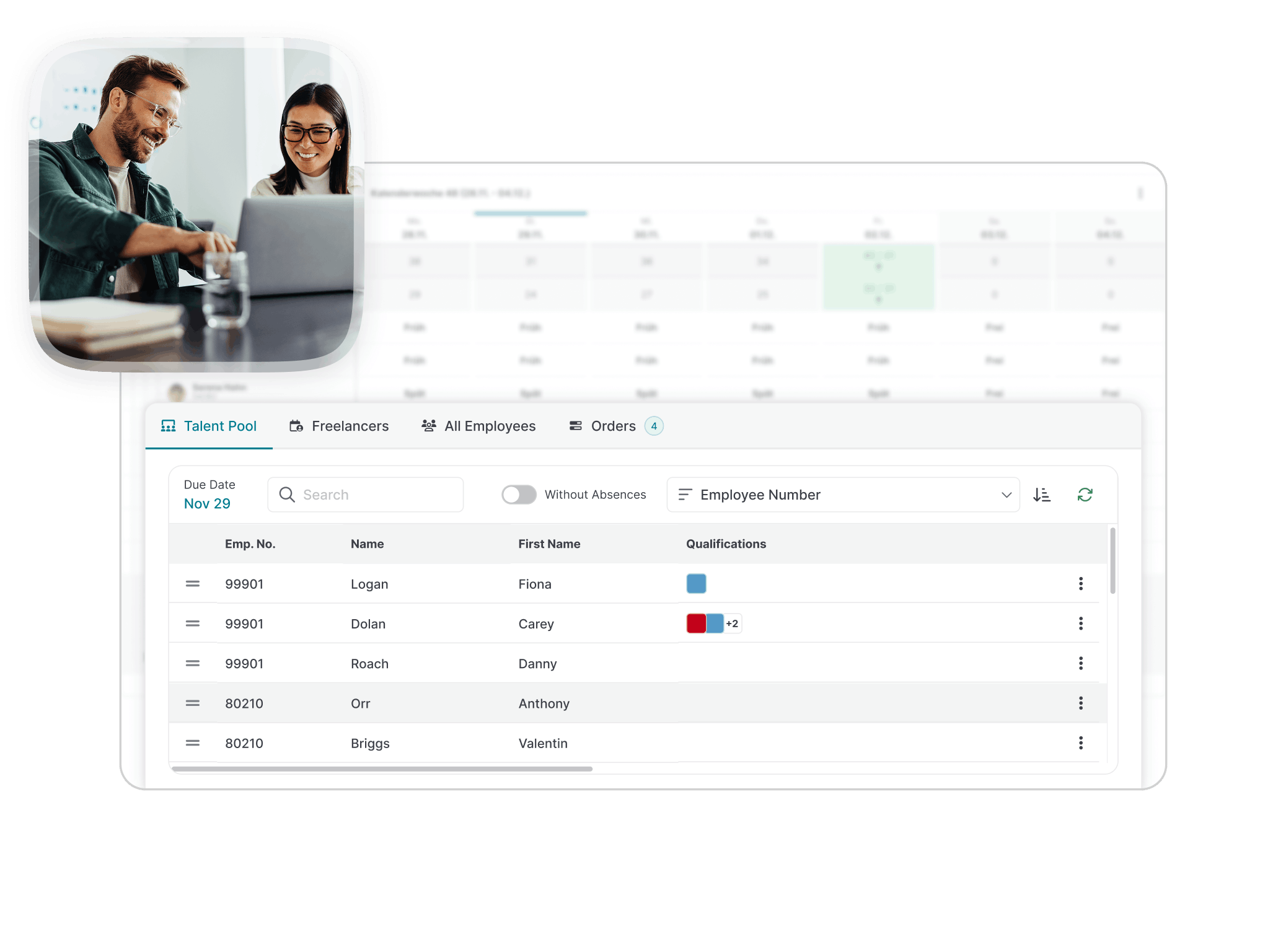
Create reliable schedules to ensure better planning security and, if necessary, adjust them flexibly - for example, by utilizing the on-call pool
Accurate Workforce Planning Through Intelligent Forecasts
In retail, having the right person in the right place at the right time determines sales and customer satisfaction. With data-driven staffing planning, retailers can schedule staff proactively and precisely according to actual demand - even when foot traffic fluctuates significantly. Real-time data, historical patterns, and operational requirements are all factored into the demand analysis.
- Demand-driven staffing, for example based on customer foot traffic and peak hours
- Avoidance of inefficient understaffing and overstaffing
- Accounting for seasonal fluctuations and promotional periods
- Planning accurate to within 15 minutes for maximum efficiency
- Reduction of labor costs while maintaining optimal service levels
Flexible Scheduling, Time Tracking, and Employee Preferences
A modern workforce management solution for the retail sector combines staff scheduling, shift preferences, and legally compliant time tracking. This allows HR managers and schedulers to keep track of working hours and rest periods while considering both operational requirements and employee preferences.
- Comprehensive and legally compliant tracking of all working hours
- Accommodation of individual work schedule preferences and availability
- Easy integration of part-time, temporary, and seasonal employees
- Reduced workload for HR and store management through digital planning processes and intelligent suggestions
- Greater transparency through employee self-service tools for requests, access to time accounts, and preferred shifts
Efficient Store Management and Maximum Responsiveness
Whether managed centrally or planned directly at the store level, flexibility is a critical factor for retail companies. With a unified solution, managers can keep track of all locations and respond quickly to changes in day-to-day operations.
- Centralized or decentralized planning across multiple stores and locations
- Unified database for greater transparency and better coordination
- Quick response to last-minute absences and illness outbreaks (including integration of electronic sick leave certificates)
- Flexible adjustment of work schedules thanks to on-call pools
Fair Planning and Well-Informed Decisions
A fair distribution of working hours and full transparency in scheduling are crucial for team satisfaction. At the same time, data-driven smart analyses provide valuable insights for optimizing your processes.
- Distribution of weekend, late-night, and special shifts based on the principle of fairness
- Transparent and traceable scheduling rules
- Higher employee satisfaction thanks to fair shift scheduling
- Insights into key metrics such as overtime distribution or location comparisons
- Better decisions through comprehensive AI-driven people analytics integration
Workforce Management in Retail in Practice
Every retail business faces unique challenges - from efficiently tracking the hours of flexible employees to coordinating scheduling across multiple locations. Our use cases show you how modern workforce management works in the retail sector in specific scenarios and which solutions can help you optimize your processes in a targeted manner.


Our success stories







Answers to Your Questions
By using demand-driven staff scheduling based on forecasts, you can deploy your employees exactly when they’re needed. This helps you avoid overstaffing, reduce overtime, and boost the efficiency of your stores.
With digital solutions, you can automatically track sick leave (including electronic certificates of incapacity for work) and respond quickly. Features such as flexible scheduling adjustments or the use of a pool of on-call staff help compensate for absences at short notice and keep operations running smoothly.
GFOS enables rule-based scheduling that ensures weekend shifts, late shifts, or Sundays when stores are open are distributed evenly across the team while taking individual availability into account.
Through self-service tools, employees can view their work schedules, submit requests, swap shifts, and easily request time off - anytime, anywhere. This creates greater transparency, reduces coordination efforts, and improves work-life balance.
Want to see the full GFOS solution for retail? We would be happy to give you a product walkthrough. Just reach out to us at:
info@gfos.com
+49 (0)201 / 61 30 00
Contact us