
Definition: What Is HR Software?
HR software (human resources software) refers to digital applications that help HR teams manage employee-related tasks efficiently across the organization.
These processes include core HR administration, recruiting, onboarding, time and attendance, performance management, learning and development, and payroll management.
Why Does It Make Sense to Compare HR Software?
Like software in any other domain, HR applications can differ significantly, for example in capabilities, usability, and total cost. Mid-sized enterprises and large organizations, in particular, need HR software that matches the complexity of their environment, supports compliance requirements, and can be used across multiple sites, including internationally.
A structured HR software comparison helps decision-makers weigh these factors and select the best solution for their specific requirements.
Download the infographic shown below.
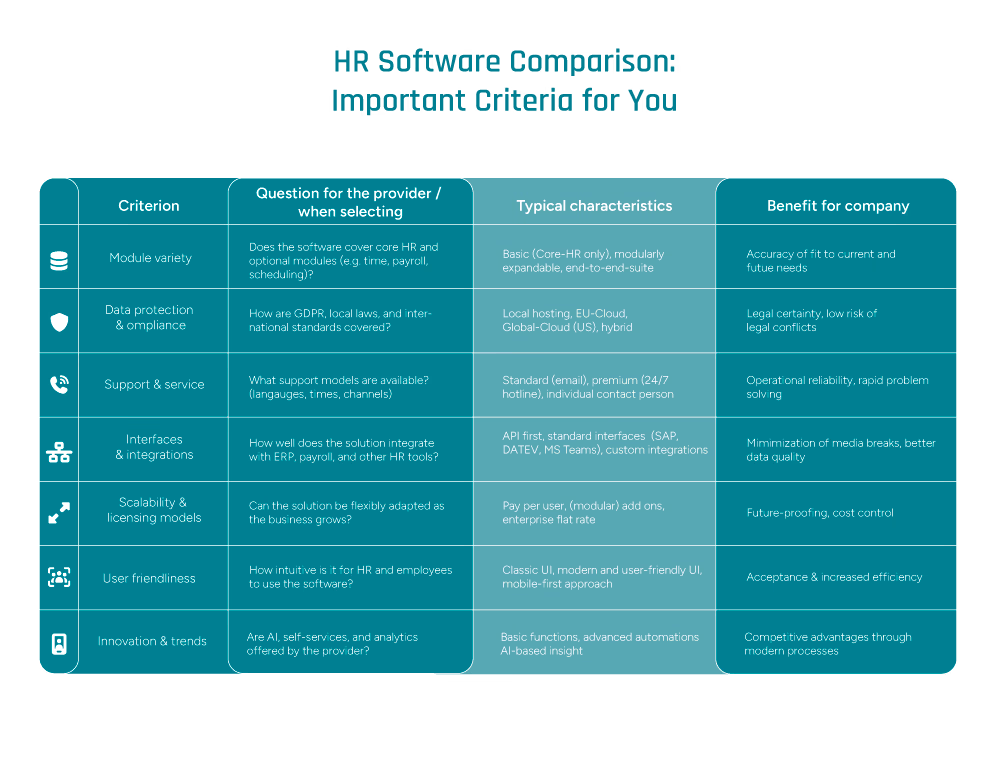
HR software comes in many forms. That is why companies should define which features matter most to them; © GFOS Group
HR Tools for Global Teams
For global teams, specialized HR solutions are critical for managing different legal requirements, languages, and operating models efficiently. Global HR organizations need to standardize processes while maintaining enough flexibility for local needs, and the HR platform must support that balance.
A key requirement is language and time zone support. User interfaces and workflows should be available in multiple languages so employees can use the system smoothly across all locations. This includes localized forms that align with country-specific legal requirements.
Beyond language, global time and attendance is equally important. Systems must capture working time and absences consistently across time zones to ensure compliance with local rules and transparent workforce management worldwide.
Case Study: GFOS HR Software at SGL Carbon
How this works in practice is illustrated in our success story with SGL Carbon, one of the world’s leading companies for the development and manufacturing of carbon-based solutions. In line with its global footprint, SGL Carbon uses GFOS HR software—one of the 25 largest HR software providers in Germany—across multiple production sites worldwide.
The implementation accounts for local requirements while centrally managing and standardizing key HR processes. This combination of standardization and flexibility is the foundation for successful global HR operations.
Cloud vs. On-Premises: How Do HR Systems Differ When It Comes to Data Protection?
Cloud-based HR systems offer a range of operational advantages. They require lower upfront investment because no in-house server infrastructure is needed.
Rollouts and updates can be managed centrally and deployed quickly, which means new features become available faster. In addition, cloud solutions scale easily and reduce internal IT workload because the vendor manages operations and maintenance.
By contrast, on-premises solutions can be tailored more extensively to an organization’s specific requirements. Because systems are operated locally, they can also be isolated from the internet, which can add an extra layer of security.
This level of control over infrastructure and data can be a decisive selection criterion for organizations that handle highly sensitive information.
Data Protection Considerations: EU vs. US Vendors
Another important factor for data protection is the vendor’s legal domicile and corporate location.
Vendors based in the European Union typically focus strongly on compliance with the General Data Protection Regulation (GDPR) and national data protection laws.
With US-based vendors, legal conflicts can arise. The CLOUD Act allows US authorities to request access to data held by US providers, even when that data is stored or used outside the United States. If personal data of EU residents is involved, this may conflict with GDPR obligations.
For EU-based companies that are subject to GDPR, hosting data with US vendors can therefore be more complex. From a data protection perspective, it is often safer to choose an EU vendor that clearly operates within the European legal framework.
Ideal for Growing Organizations: Flexible Licensing Models
Many modern HR platforms offer flexible licensing models that are especially well suited for growing organizations. Two common approaches stand out:
Subscription Licensing Models
Subscription licensing models, such as our SaaS bundles, are typically based on a fair pay-per-user approach. That means organizations pay only for the user licenses and features they actually use. Thanks to a modular structure, additional modules can be added at any time, for example recruiting, time and attendance, or performance management.
This model enables a phased rollout that grows with the business. New sites, departments, and teams can be onboarded without changing the underlying system architecture.
Enterprise Licensing Models
Enterprise licenses often require a larger one-time investment, may be tied to fixed modules, and are typically sold through long-term contracts. This can make sense for very large organizations with stable structures, but it offers less flexibility when needs change quickly or new capabilities are required.
Especially during global growth, a scalable licensing model is essential. Platforms with modular structures or clearly defined package pricing make it easier to add capabilities over time, for example when new countries are added or more HR processes are being digitized. This keeps costs transparent while the platform evolves alongside the organization.
Enterprise HR Software Trends in Europe and Worldwide
Across Europe and globally, several major enterprise HR software trends are shaping the future of digital HR:
AI-Powered Processes and Analytics
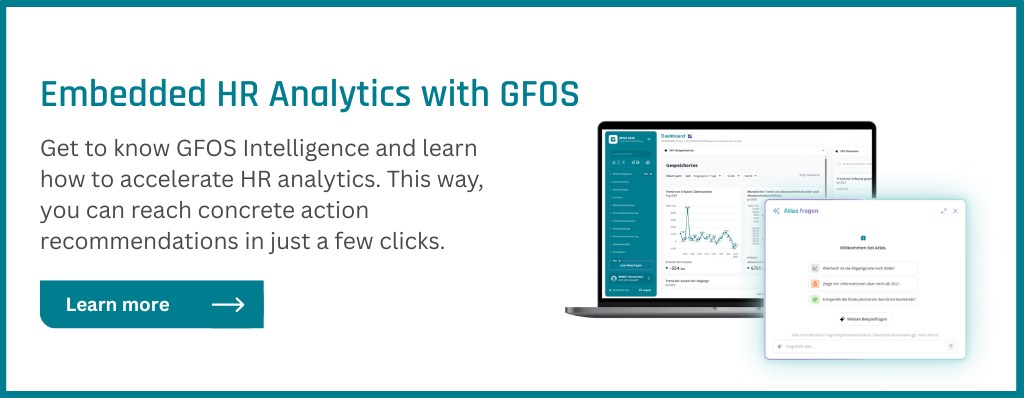
Artificial intelligence (AI) is reshaping HR by going beyond data processing to enable advanced analysis, including in people analytics. HR solutions use AI to identify patterns in employee data, generate predictions, and deliver tailored recommendations.
This helps HR teams make data-informed decisions and take strategic action. One example is the use of AI agents within HR systems to automate tasks and enable more personalized interactions.
Self-Service Platforms and Mobile Apps
Modern HR systems provide self-service portals and mobile apps that allow employees to manage their own data, submit time-off requests, and review performance feedback. These tools increase usability and flexibility by giving employees access to relevant information anytime, anywhere.
Integration with Collaboration Tools
Seamless integration of collaboration tools such as Microsoft Teams or Slack is becoming increasingly important. It improves communication and collaboration across the organization and helps teams access HR-relevant information directly in the tools they already use.
Focus on Employee Experience
Organizations are placing greater emphasis on employee experience, meaning the end-to-end employee journey within the company. As a result, HR software is evolving into a platform that not only streamlines administrative work but also supports employee well-being and development. This includes capabilities such as personalized learning content, feedback tools, and wellness programs.
These trends show that HR platforms are becoming smarter, more flexible, and more employee-centric to meet the demands of a dynamic, global workforce.
Implementing New HR Software in Enterprises with Legacy Systems
Implementing new HR software in an enterprise that relies on legacy systems such as SAP or Oracle is a complex undertaking. One of the most critical success factors is integration with existing ERP systems.
To keep master data consistent and avoid redundant data issues, you need reliable interfaces. Modern HR solutions such as those from GFOS often provide standardized and certified connectors that enable a smooth connection to legacy environments.
Another critical area is data migration and cleansing. Before moving data into the new system, legacy data should be reviewed carefully: duplicates removed, formats standardized, and inaccurate entries corrected. A clean data foundation is essential to prevent later inconsistencies and system errors.
In parallel, change management is essential. HR teams need targeted training to apply new processes confidently. Communication across the broader workforce is just as important, for example if working time must be recorded differently going forward. Transparent messaging and enablement help employees adopt the new workflows and use them effectively.
Enterprise rollout best practices often recommend a phased approach: start by piloting the software in one department, then expand across the site, and later to additional countries or business units. In parallel, define clear monitoring and success criteria to evaluate rollout progress and enable timely adjustments.
Fairly Evaluating HR Software Vendors in 3 Steps
An objective comparison of HR software vendors requires a structured approach. The following steps have proven effective in practice:
1 Create a requirements and evaluation checklist
Start by clearly defining your organization’s requirements and documenting them in an evaluation checklist. Typical evaluation criteria include features and modules, data protection and compliance requirements, support and services, integration options for existing systems, user experience and usability, and mobility (availability of mobile apps and self-service portals).
2 Pilot and run a proof of concept (PoC)
A live test in selected areas of the organization allows you to validate real-world fit. Simulate core processes, test interfaces, and evaluate usability with key user groups. This helps verify system performance under realistic conditions before a company-wide rollout.
3 Review user feedback and customer references
Insights from other organizations of similar size or in the same industry can be a valuable decision factor. References provide visibility into long-term reliability, support quality, and integration delivery. In addition, public review platforms such as OMR Reviews can help you build an objective view of vendors.
Experience GFOS HR Software
Are you looking for an HR solution that fits your organization? Contact us and request information materials to move your evaluation forward. We are happy to help.
