Workforce Intelligence: Using data where decisions are made
At the heart of this development is the Workforce Intelligence approach: information is no longer generated in isolation within reports or external analytics tools but is made available directly within the workflow. This provides HR departments and operational areas with support precisely where planning, control, and decision-making take place.
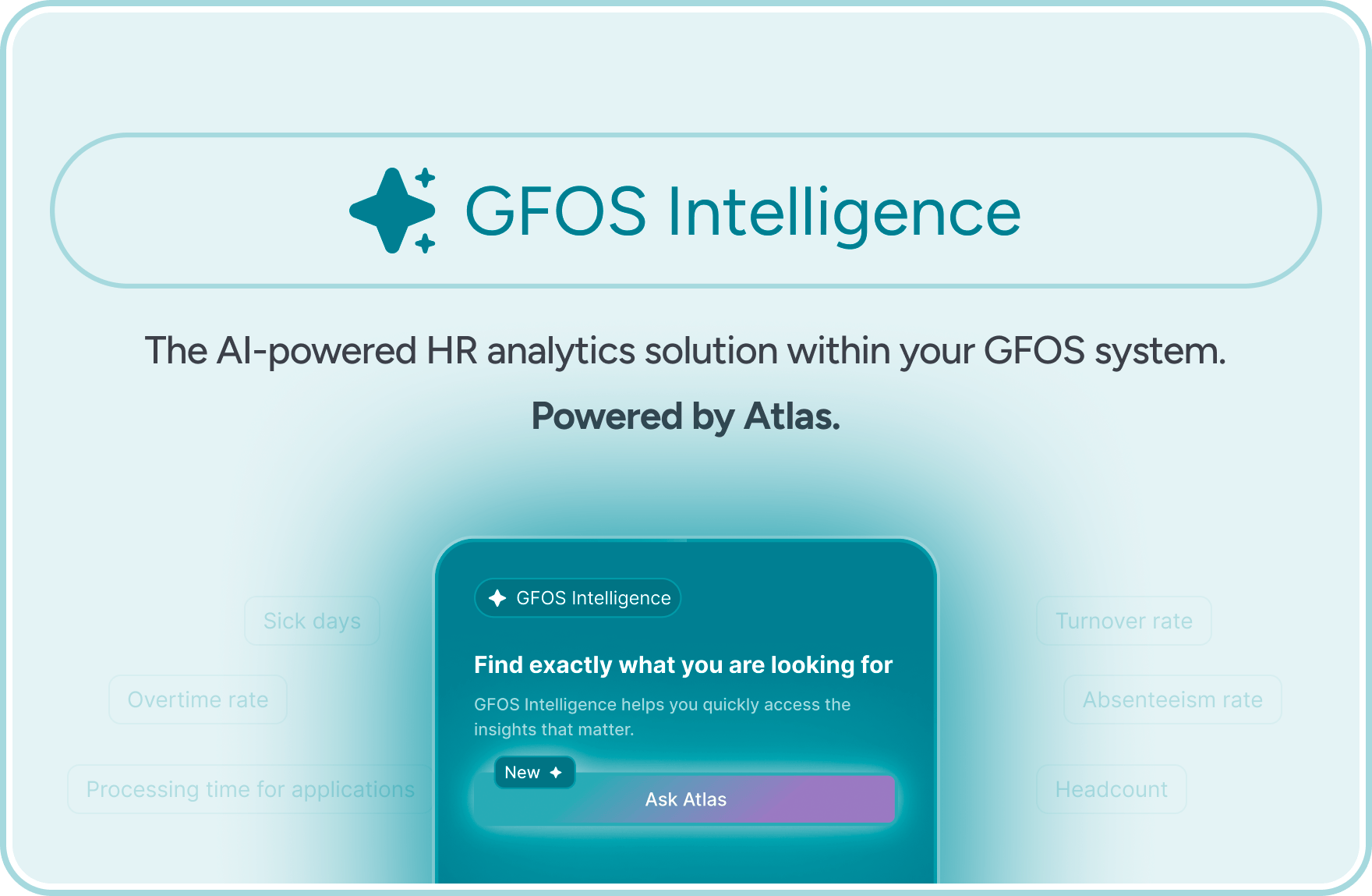
A key component is GFOS Intelligence. This analytics component integrates dashboards, key performance indicators, and reports directly into existing workflows. This provides real-time visibility into capacity, costs, and staff deployment. In addition, forecasts and data-driven recommendations enable proactive planning and help companies manage their human resources more efficiently.
New Features for Employee Scheduling
Furthermore, GFOS 2026 significantly expands the features in employee scheduling. A new employee scheduling planning dialog enables noticeably more efficient and flexible scheduling directly on the web. Additionally, enhanced employee scheduling reporting provides greater transparency regarding actual, target and framework schedules, allowing companies to better analyze and manage their planning.
Additionally, an automatic planning proposal supports employee scheduling: The AI-powered feature generates needs-based planning proposals while considering both legal requirements and operational rules. This simplifies planners’ work and helps organize shifts and capacities more quickly and reliably.
These functions are complemented by additional AI-powered applications in workforce management. These include the AI Assistant Atlas, which guides users through the system and simplifies functions such as navigation, knowledge access, and self-service.
Open Platform and Flexible Integration
In addition to new analytics and AI features, GFOS 2026 also emphasizes an even greater openness of the platform. The GFOS API enables seamless integration of external systems and efficient processing of HR data. Open interfaces facilitate flexible integration into existing IT landscapes and simplify data exchange between different applications.
In addition, OData (Open Data Protocol) supports standardized access to data sets. This allows companies to easily use information for individual analysis, for example, directly in Microsoft Excel or other analytical tools.
Focus on practical benefits in everyday work
The focus is deliberately on practical use cases: no buzzwords, but tangible benefits in everyday work - from planning and analysis to daily use by employees and managers.
With the further development of its platform, GFOS aims to make workforce management a more powerful decision-making tool: data becomes available directly in context, analyses provide immediate guidance, and AI supports the derivation of concrete measures.
Experience GFOS 2026 at Zukunft Personal Süd
GFOS will present these developments to a wider professional audience on April 21 and 22, 2026, at Zukunft Personal Süd in Stuttgart (Hall 10, Booth C.30). Visitors can learn about the new features of GFOS 2026 and see firsthand how embedded analytics and AI work together in workforce management.
